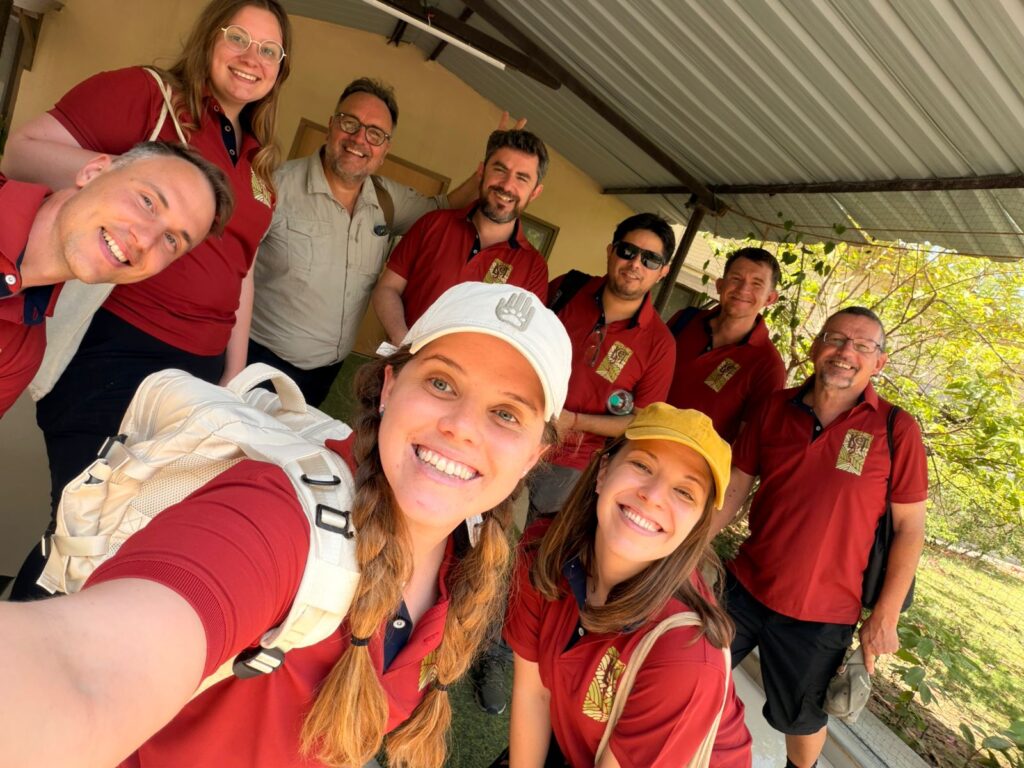
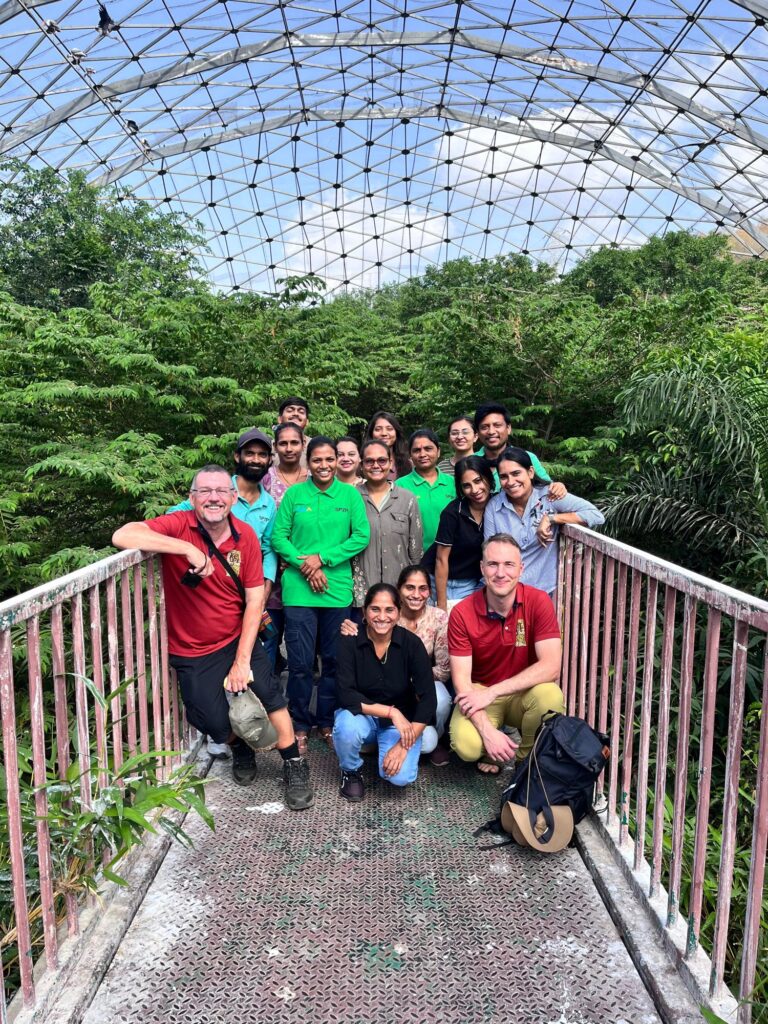
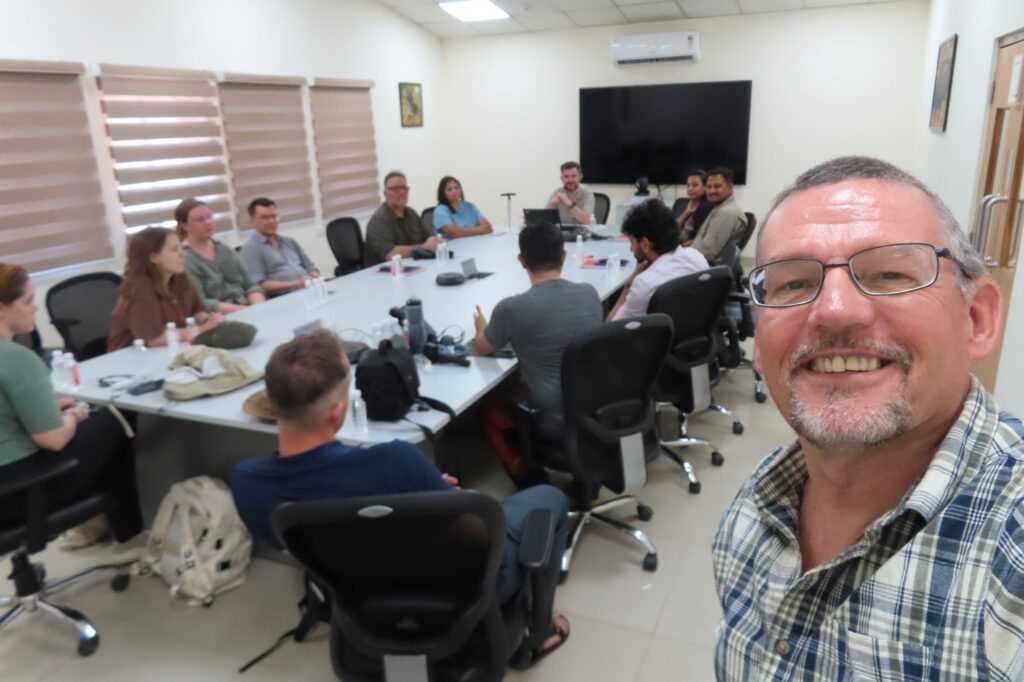
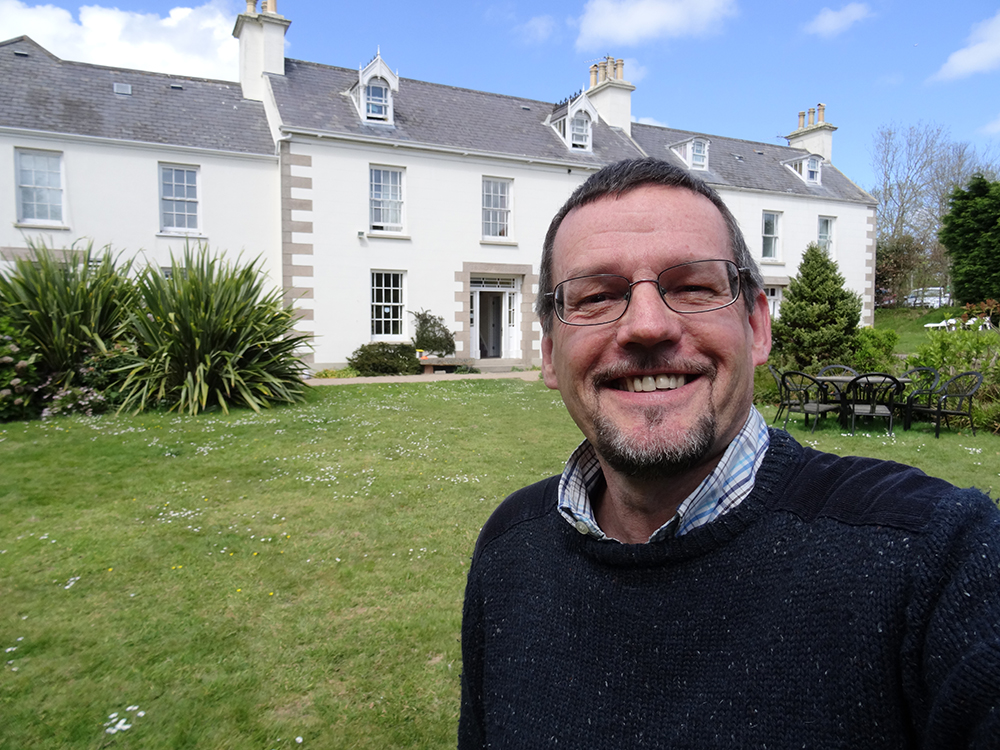
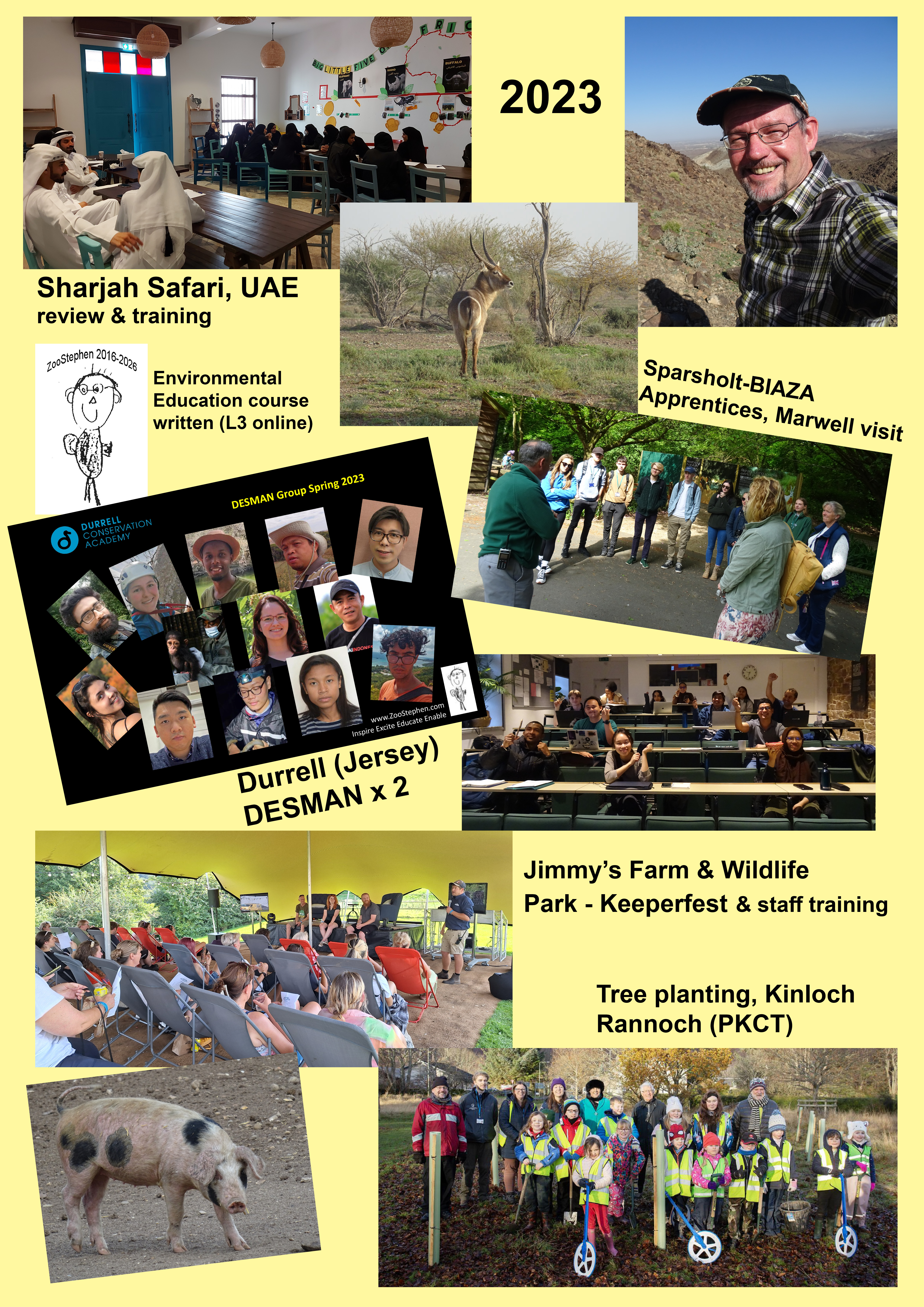
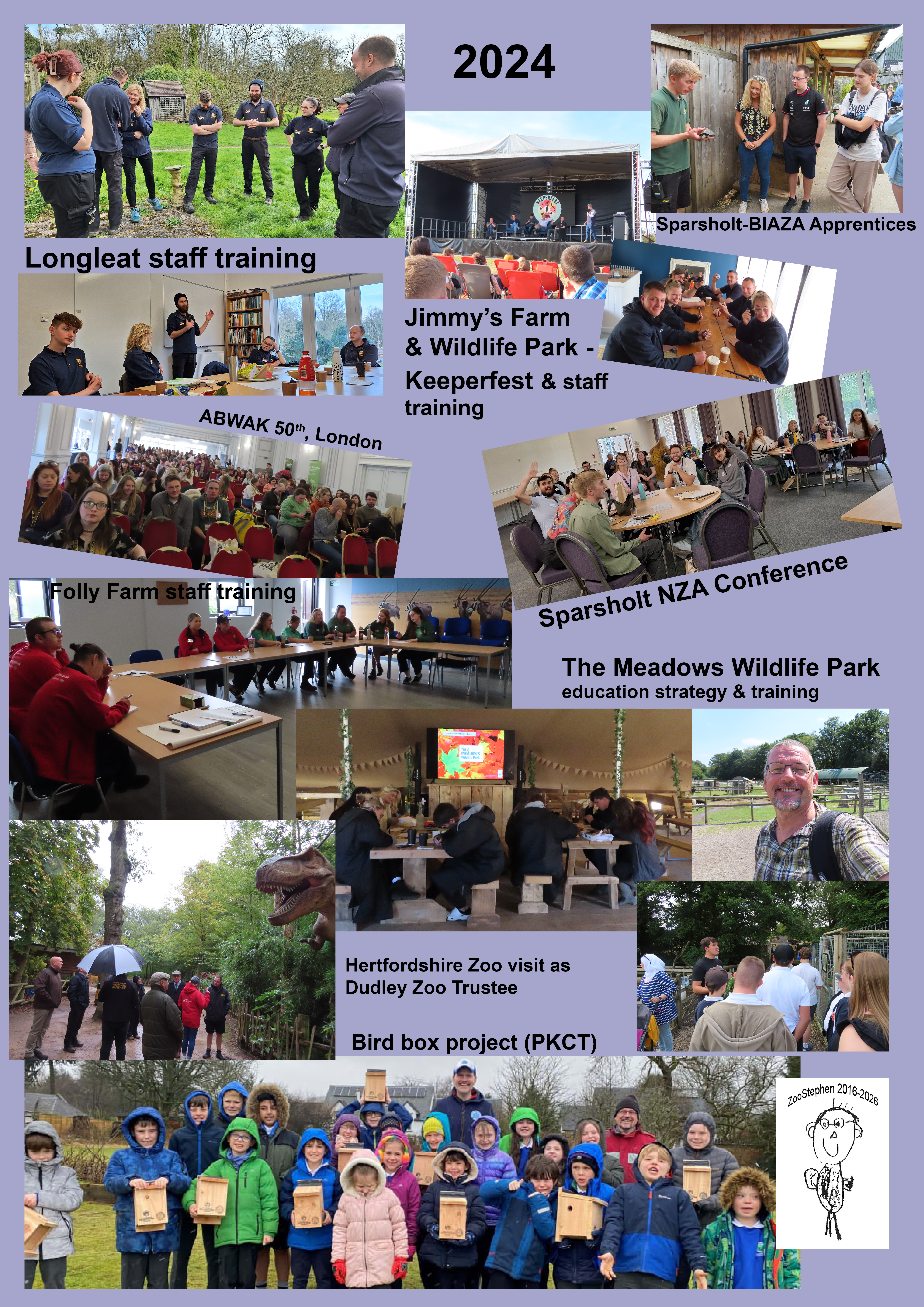
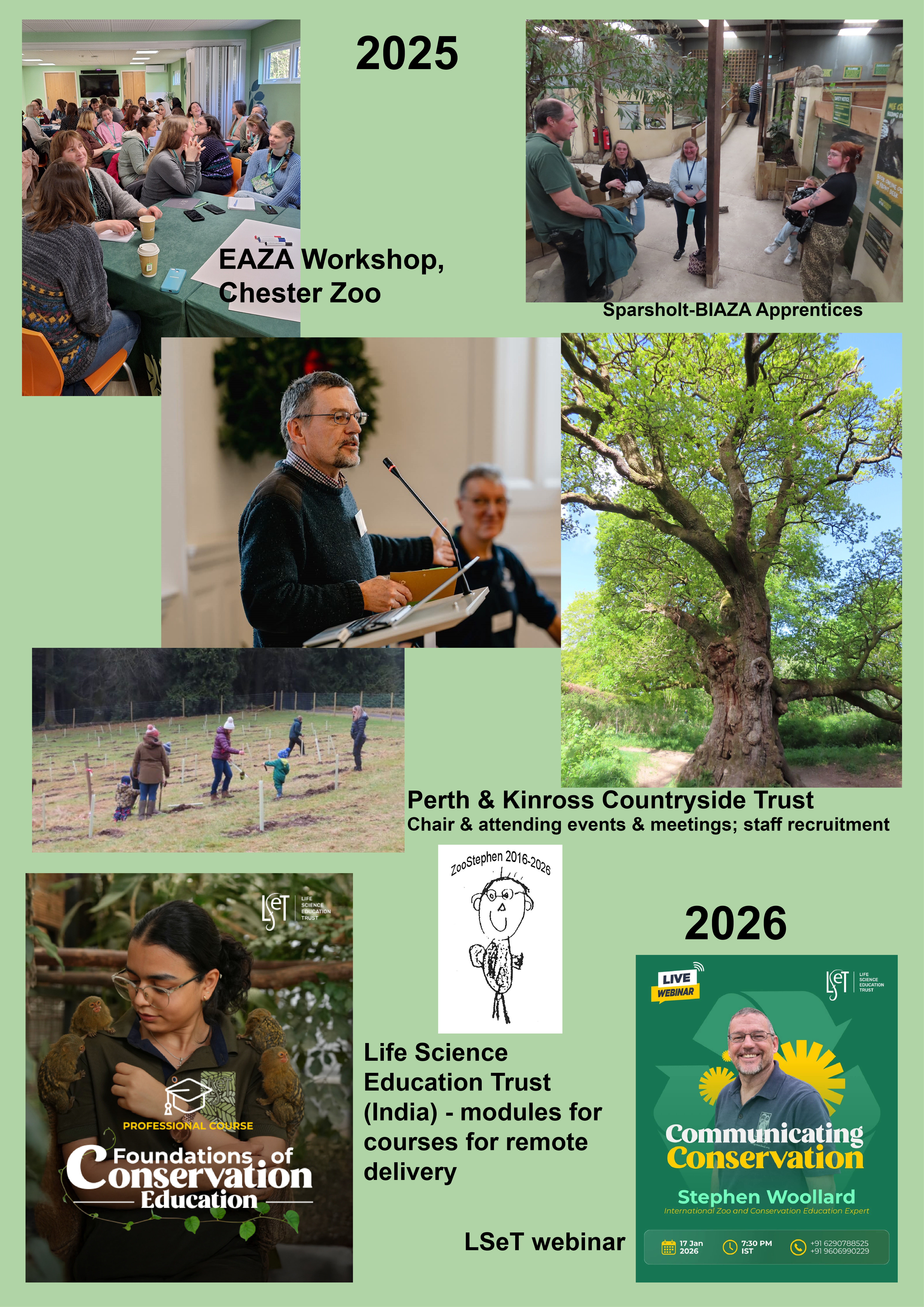
After 10 years of ZooStephen this year has been marked by further international engagement and travel. After a holiday visiting renaissance Italy (Florence & Pisa) in March, I travelled to Denmark & Sweden in April to deliver a training workshop and then at the end of May was part of a team visiting India delivering training as part of the pilot of the Indian Zookeeper Competency Framework for Life Science Education Trust [LSeT].
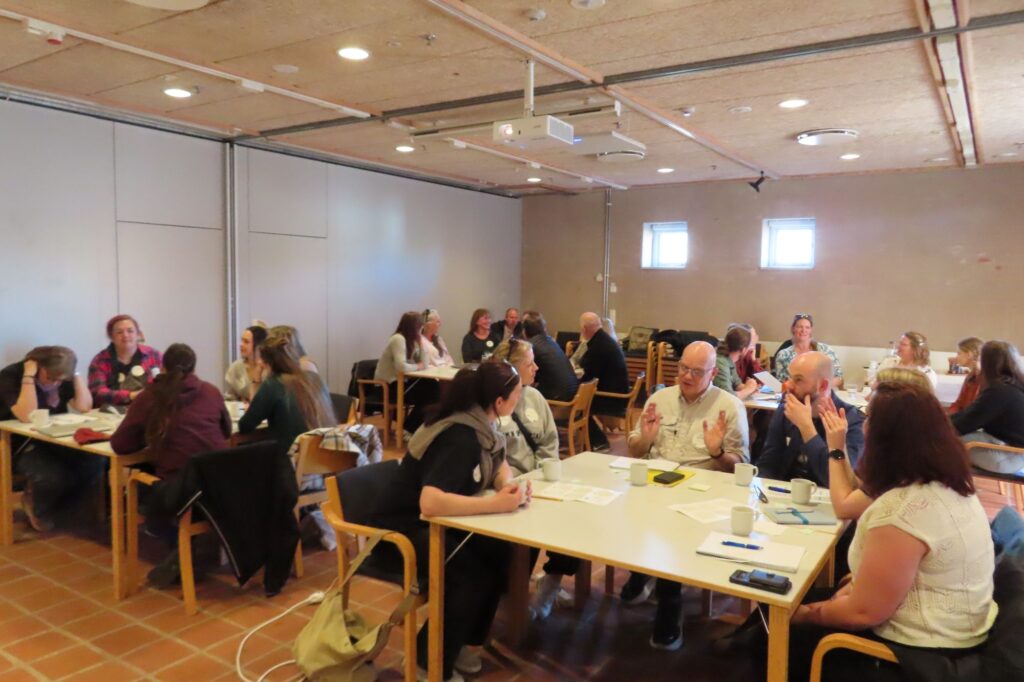
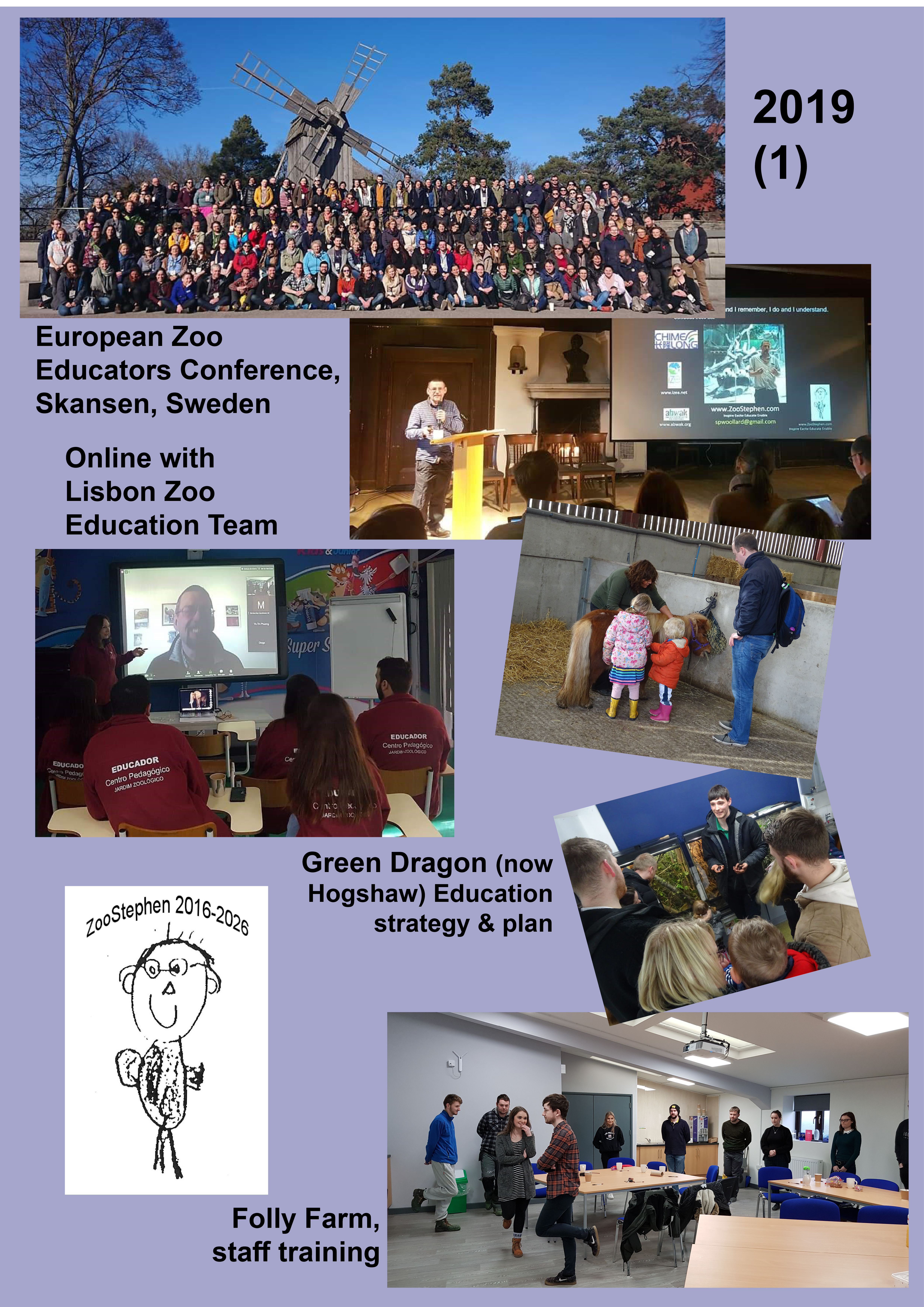
I was invited as a guest speaker / workshop leader to the Swedish Zoo Association – Svenska Djurparksföreningen – education meeting in Helsingborg, Sweden in April. It was great to facilitate a 4 hour session involving a diversity of communication skills and challenges to education conservation messages. The delegates came from zoos across the country and thankfully for me spoke excellent English.
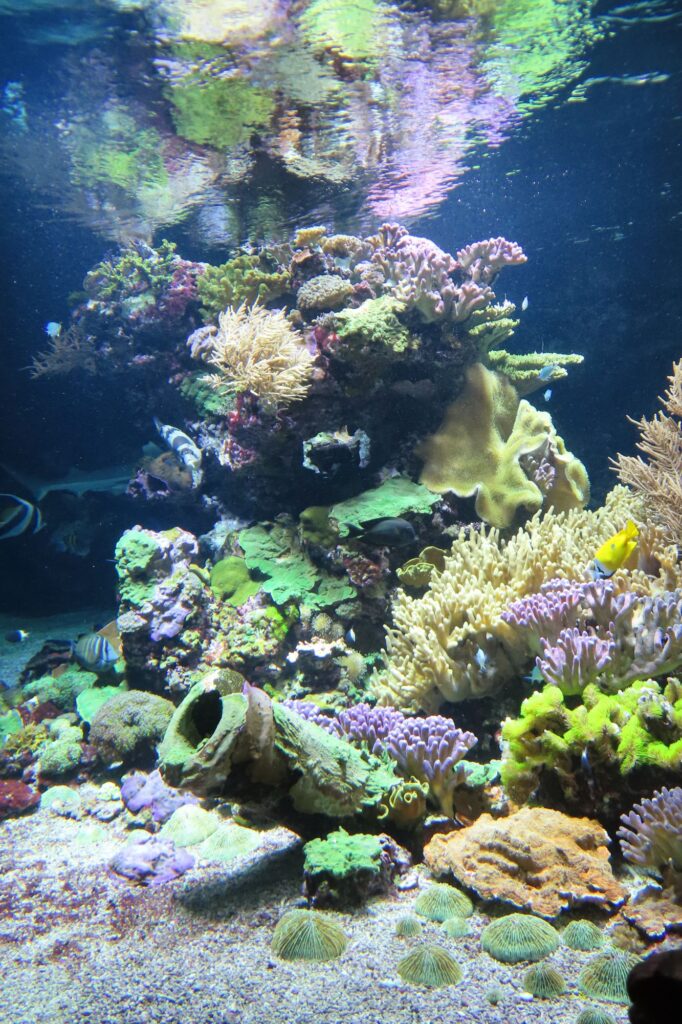
The workshop was held in the historical open museum however, the local zoo, Tropikariet, hosted a visit and dinner. An interesting small tropical collection primarily featuring aquarium and reptiles, with some other species. During my trip to the region I took the opportunity to revisit the historic Copenhagen Zoo – first visited back in 1996.
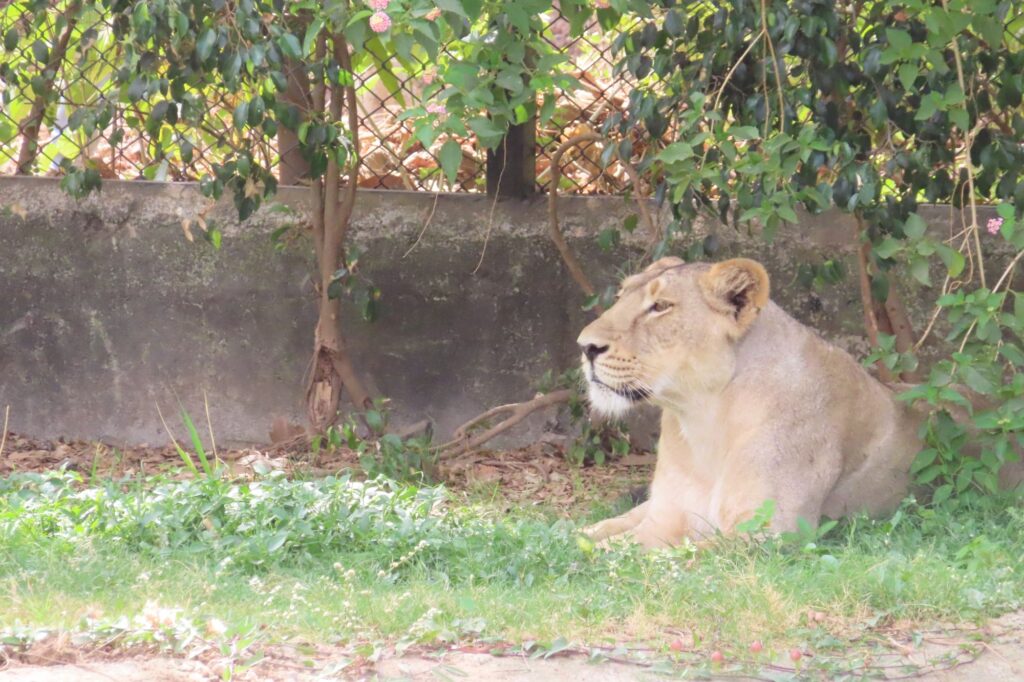
The Asiatic lion is found wild in the Gir Forest, Gujurat, India. Sadly I had to pass up the chance of seeing them in the wild, due to logistics (distance & time) and cost, however, I was delighted to visit Gujurat in late May – although one of the hottest weeks of the year (40+ degrees).
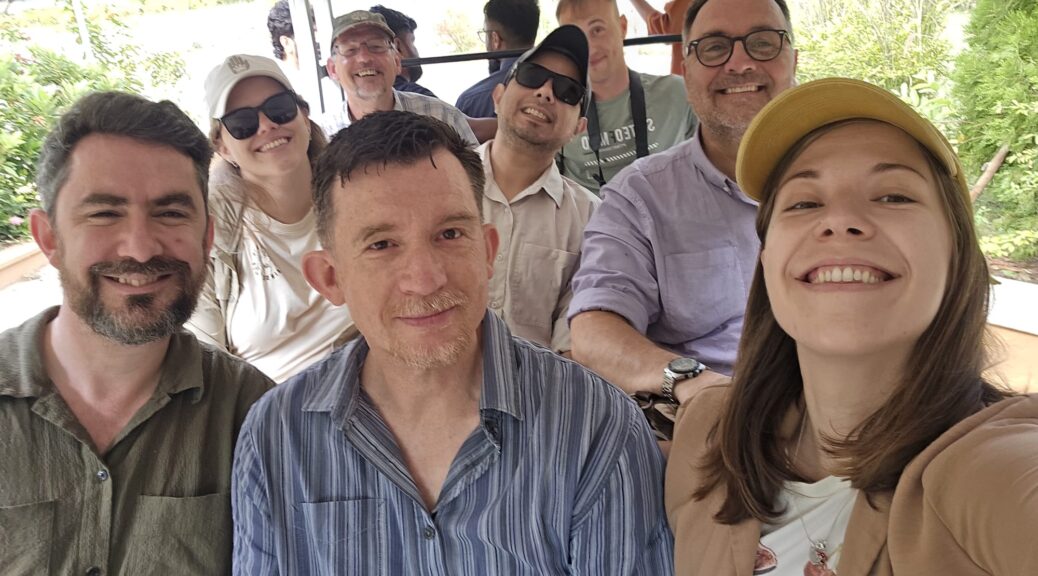
Sardar Patel Zoological Park, Ekta Nagar, was chosen to pilot the Indian Professional Competency Framework for Zoos & Wildlife Care developed by Daniel O’Loughlin and Life Science Education Trust LSeT. It was an honour to be part of an international team [UK, Ireland (via Netherlands), Czech Republic, Mexico (via UAE)] spending a week at the site delivering training sessions and supporting the zoo in its drive to high standards.
SPZP is a new zoo, inaugurated in 2020 as ‘Jungle Safari’. The zoo has some excellent habitats for a diversity of species from lion to Indian rhino and crocodiles to cobras. Although the aviaries are also of particular note. The staff team are dedicated and committed to good standards of animal care and improvement. So the competency framework provides a good model for standardisation and recognition.
Our work involved mornings out on site with review of the different sections and delivery of training / support with ideas to the keeper team and afternoons working with the ‘supervisor’ team and managers on specific focused topics including safety, training, communications.
The work with SPZP continues and a follow up visit (Daniel with one or two others) to assess the progress against the standards will be made later in the year. The Competency Framework will then hopefully be used by LSeT in other Indian zoos.
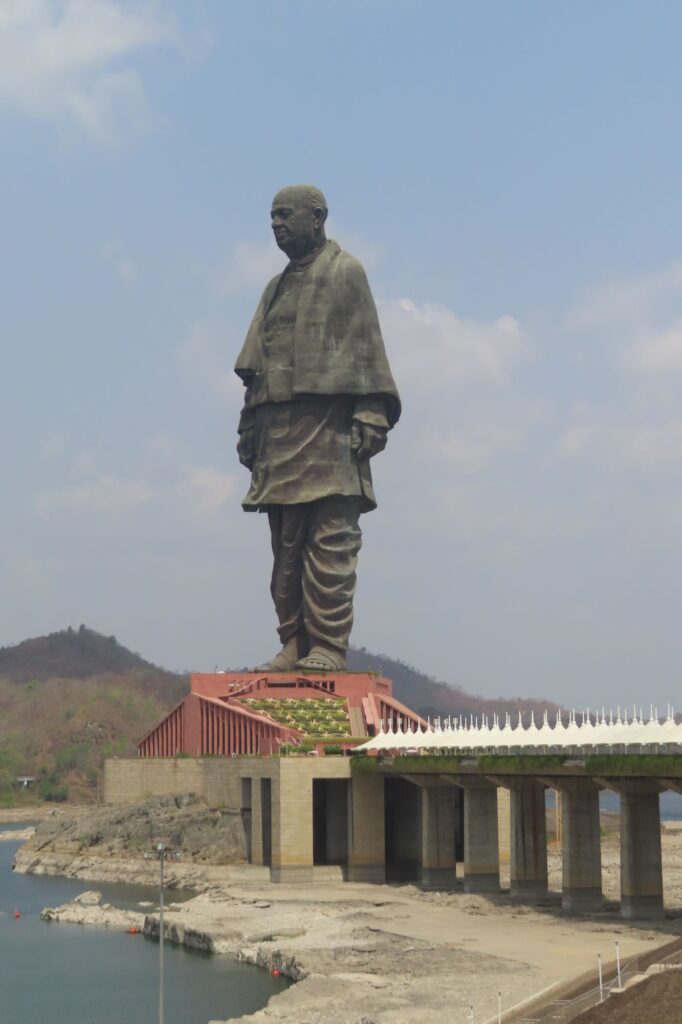
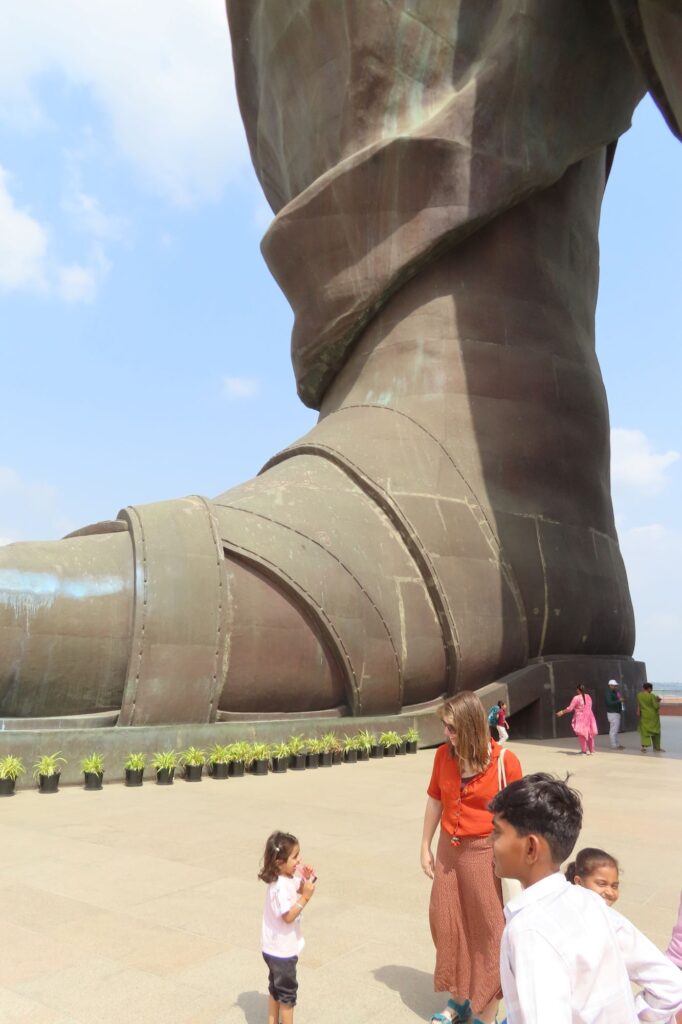
Near the zoo is the world’s largest statue at 182m tall – the Statue of Unity commemorates Vallabhbhai Patel (1875-1950) an independence activist, friend and contemporary of Gandhi, who served as India’s first deputy prime minister.
The statue is truly impressive and you can go up by elevator to ‘chest height’ for a good view of the surroundings including the hydo-electric dam on the Narmada River. As westerners we were actually an ‘added attraction’ with several requests for photos.
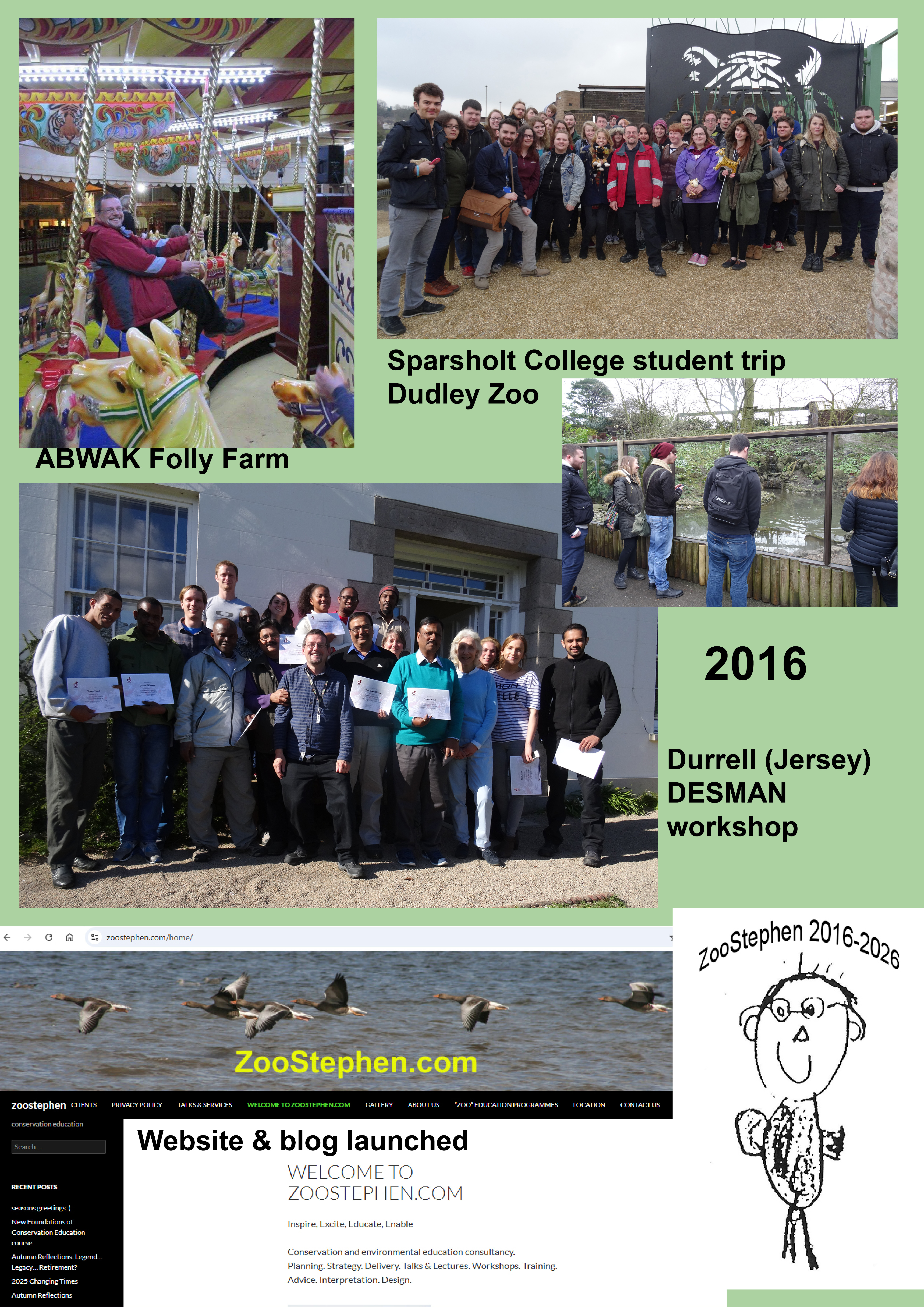
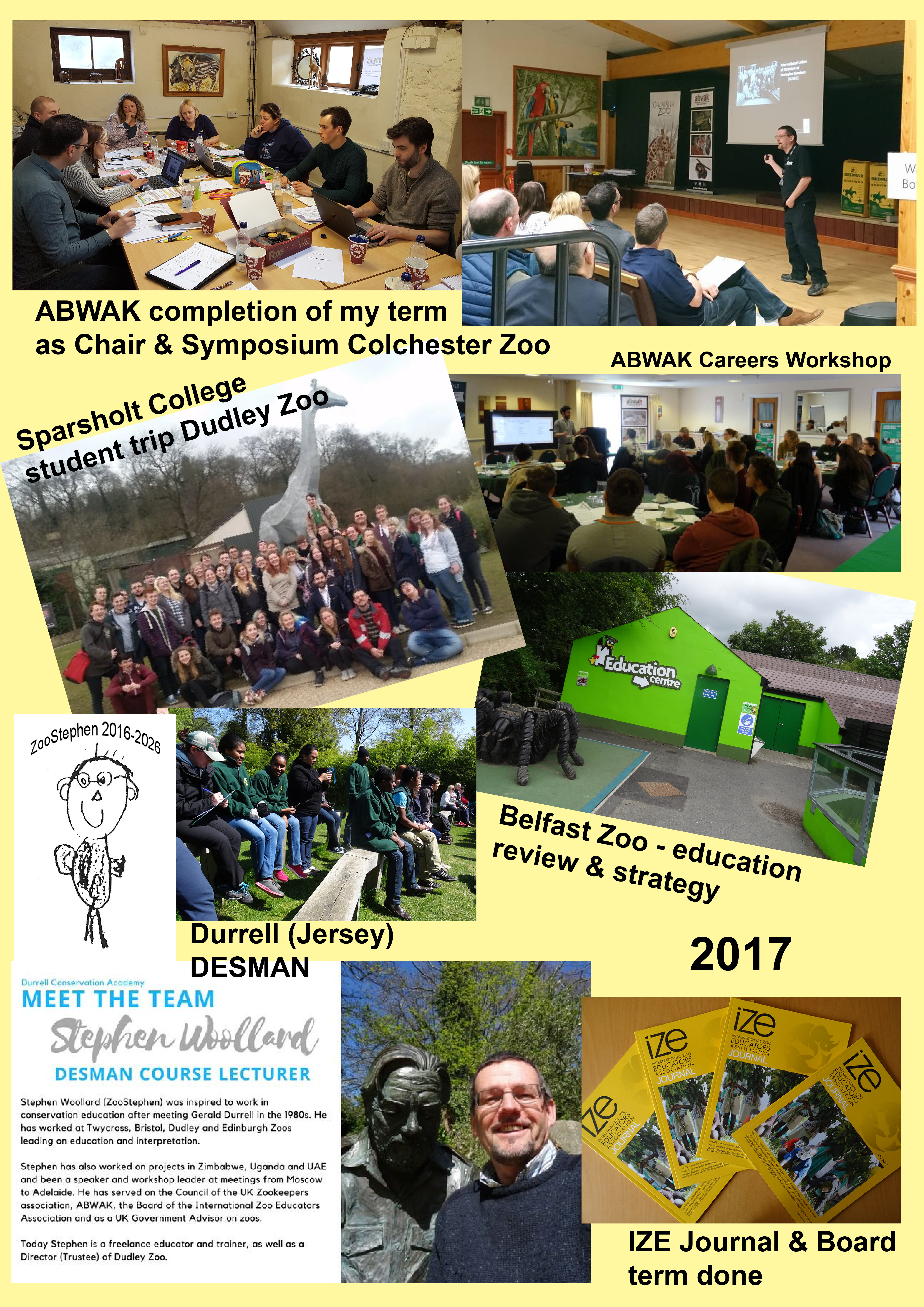
10 years ago I took the step of becoming self-employed and established ‘ZooStephen.com’. It has been an interesting decade with ups and downs, challenges and wonderful experiences. At the heart of this I have succeeded to some degree and my 10 years of activity has largely been a product of the connections made in the previous 3 decades and taking advantage of ‘lucky’ occurrences and opportunities.
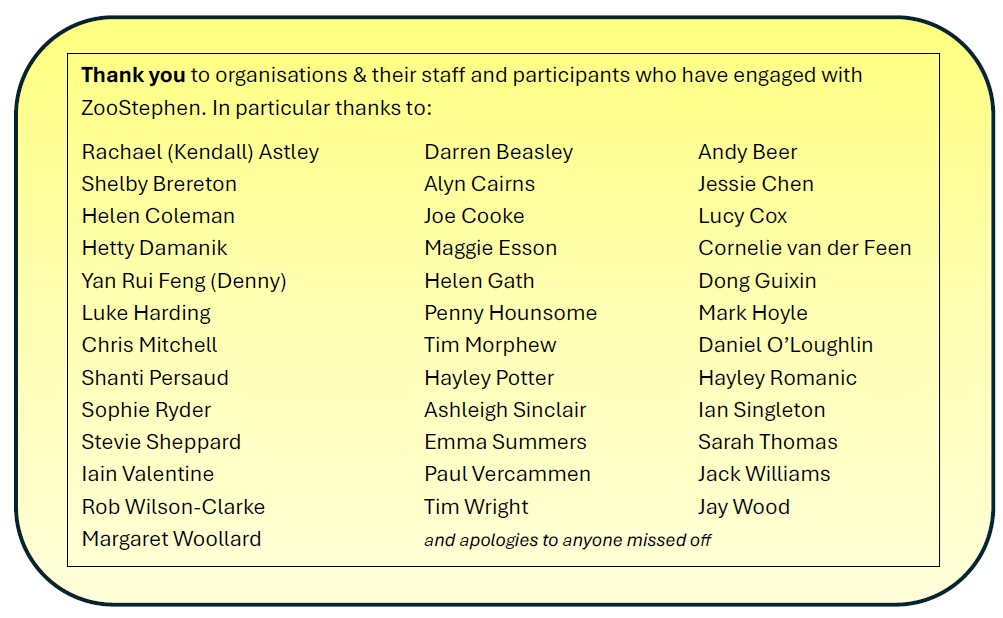
This blog is in part to thank all those who have helped me along the way but also to acknowledge some of the reality and challenges. ZooStephen is not finished yet, however I will continue to be realistic in what is my gradual journey to ‘retirement’.
Throughout my career I especially enjoyed learning from and supporting others and being involved in the zoo education community and more. I was fortunate that my first ‘zoo boss’ Malcolm Whitehead allowed freedom and innovation – something I tried to incorporate in my working life, although at times this challenged other people’s ideas and ways of working – and I certainly wasn’t always in the right.
ZooStephen came about through circumstance of leaving full-time work (not the right fit) and a need to pay bills… I applied for various roles and was ‘2nd choice’ a couple of times and was offered an environmental education job out of the zoo industry but the salary meant I couldn’t afford to move to it. So in the first 12-18 months my focus was ‘survival’ and what next? This actually enabled me to rethink and by moving (back to Scotland) I was able to buy a ‘cheap’ house and give myself the freedom of no mortgage or rent – and that was probably the most significant decision to how these last years have panned out.
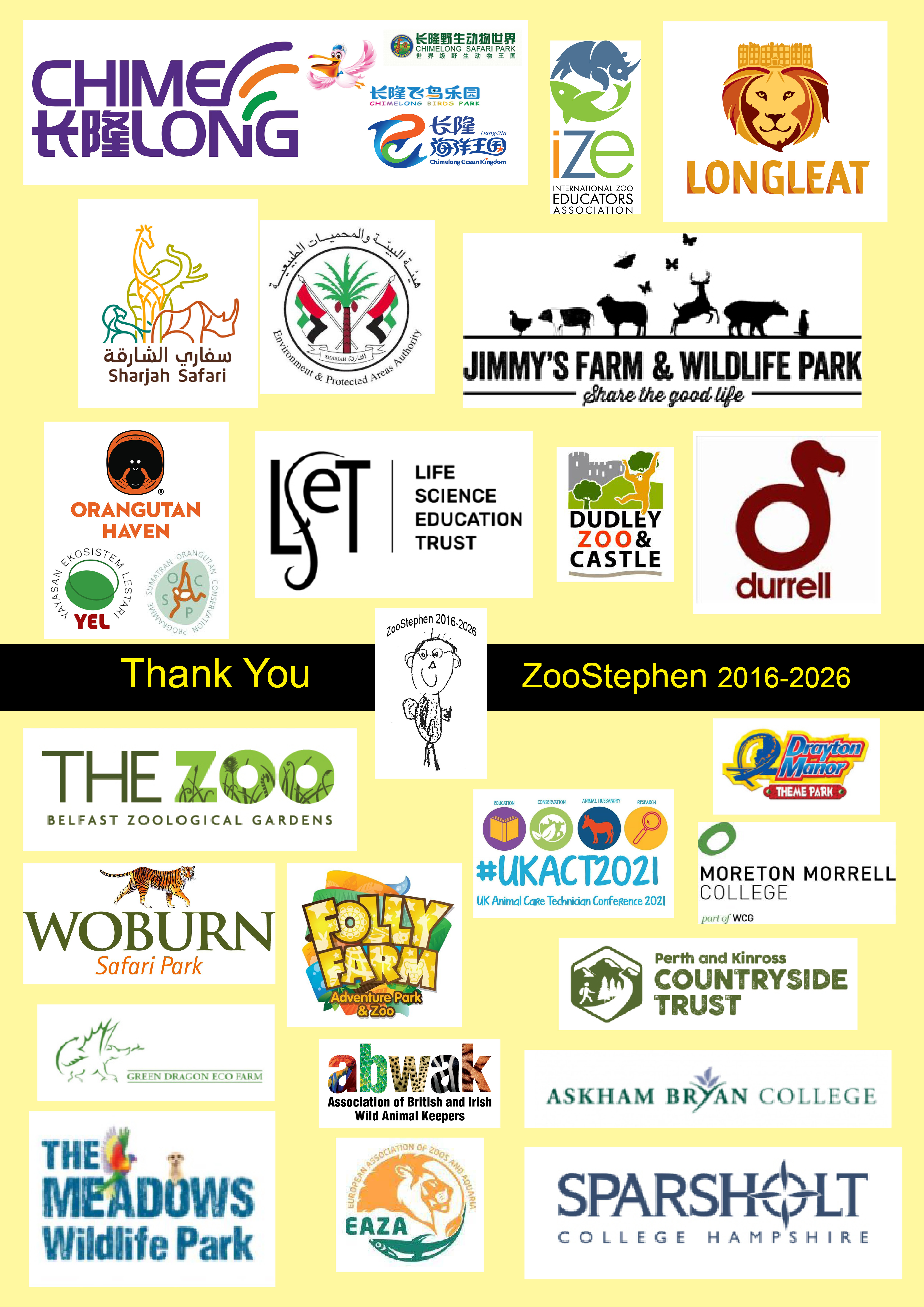
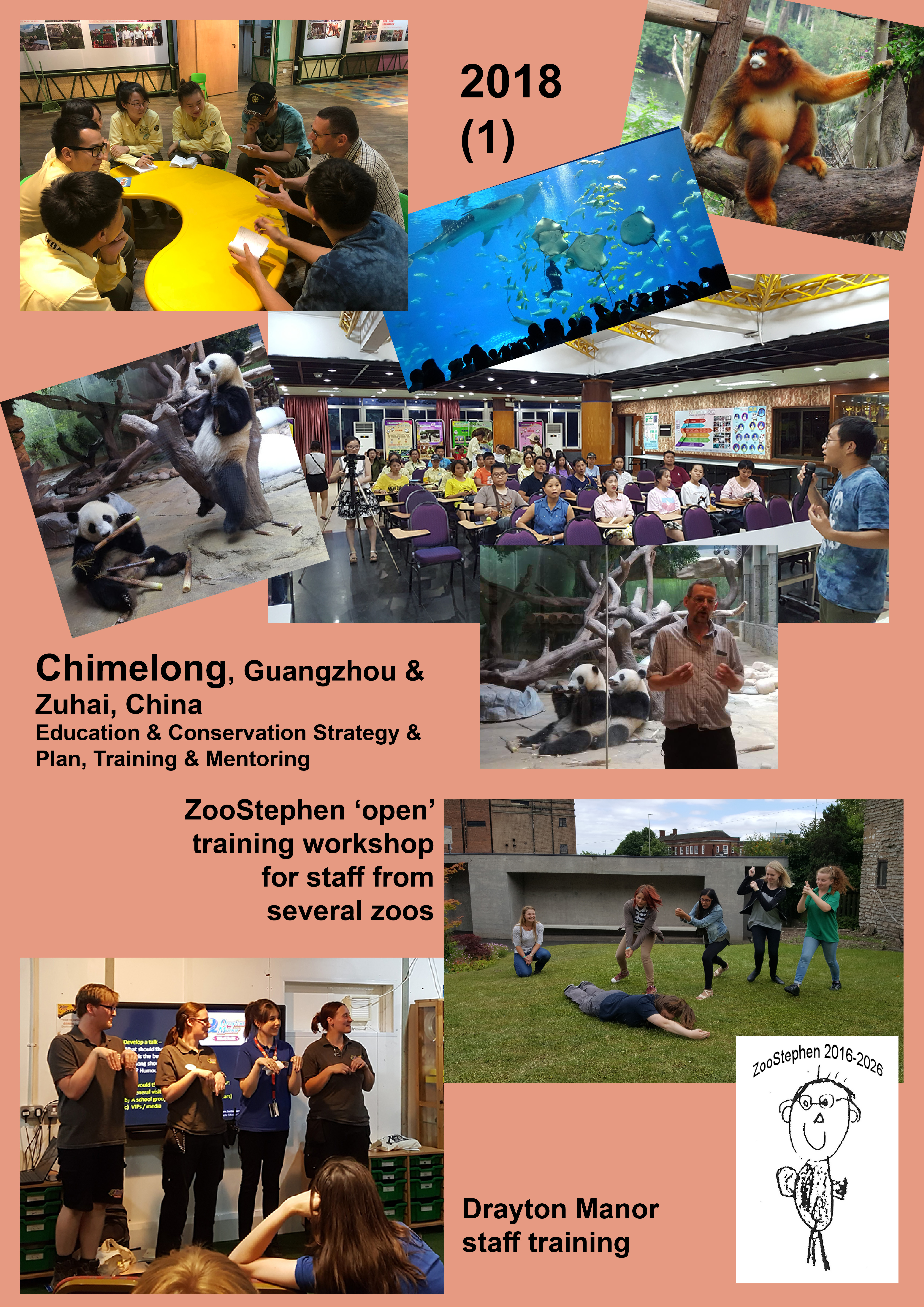
Early opportunities to shape my ‘training’ provision and ways of working came through friends Daniel, Maggie, Tim & Darren with respectively work for Sparsholt, Durrell, Folly Farm and Longleat. I also discovered (as suspected) that there isn’t much money in this field and if I wanted to earn a living wage it would be a lot of work. However, these experiences were fun and appreciated and form the backbone of my ‘training’ role still.
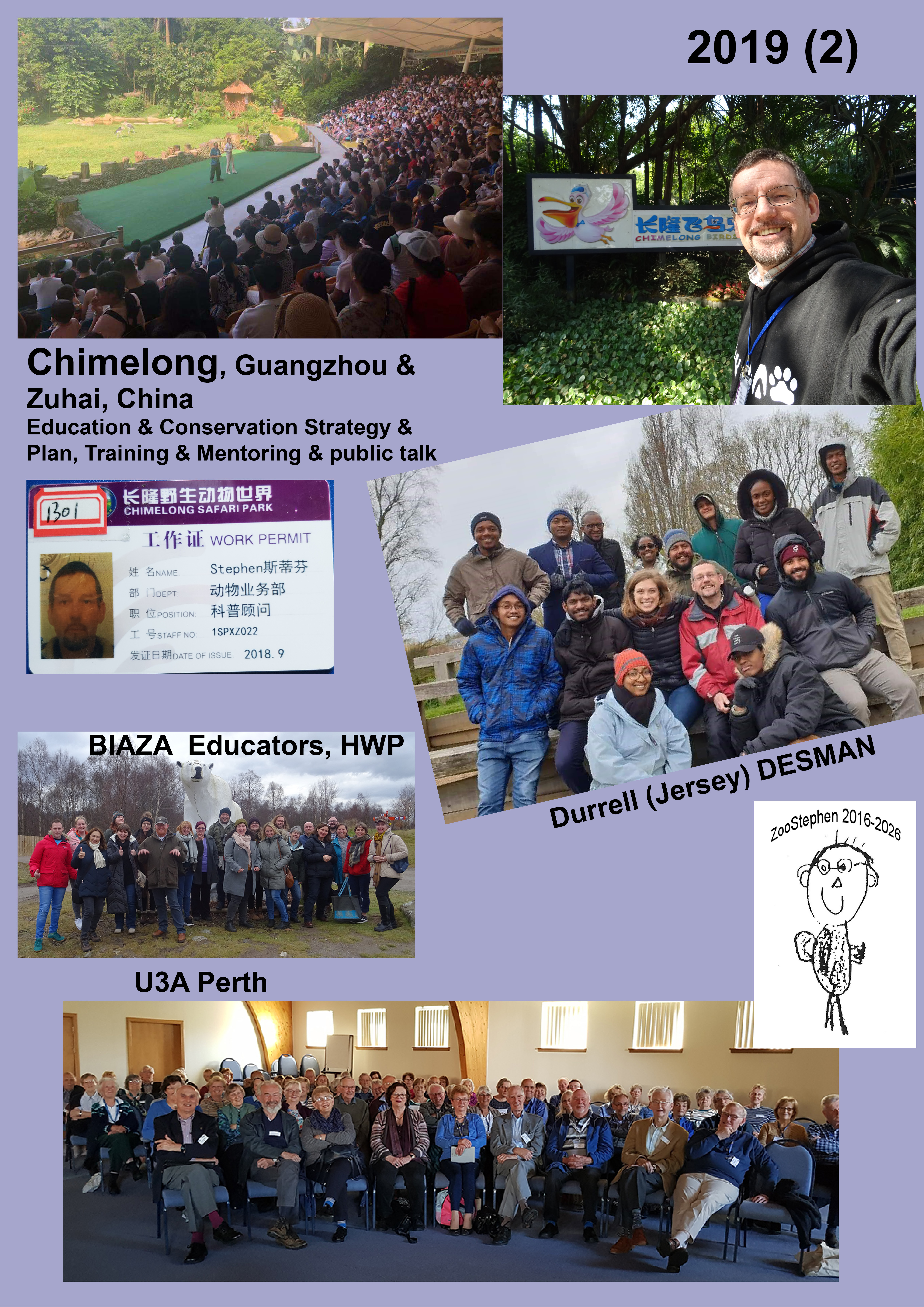
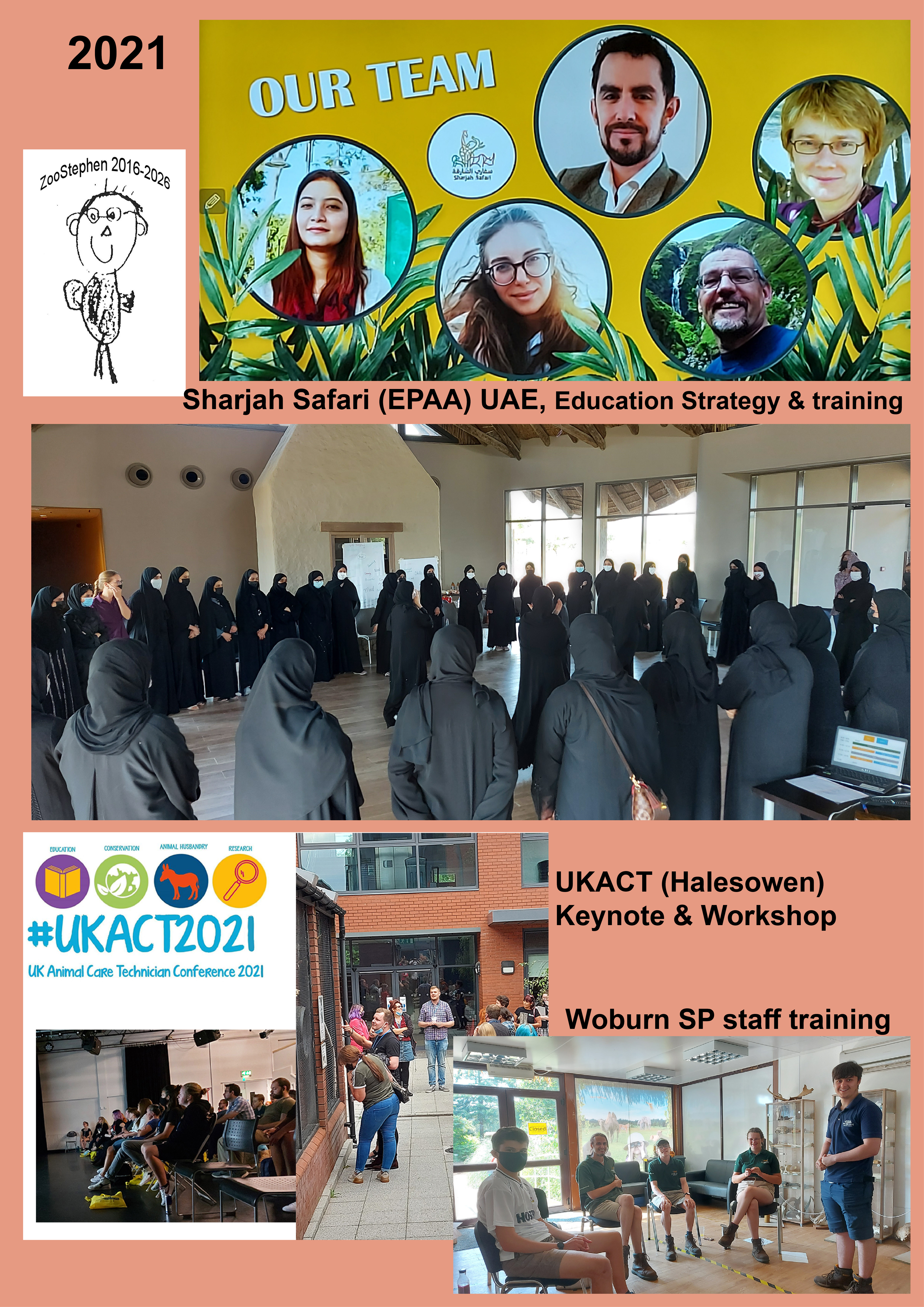
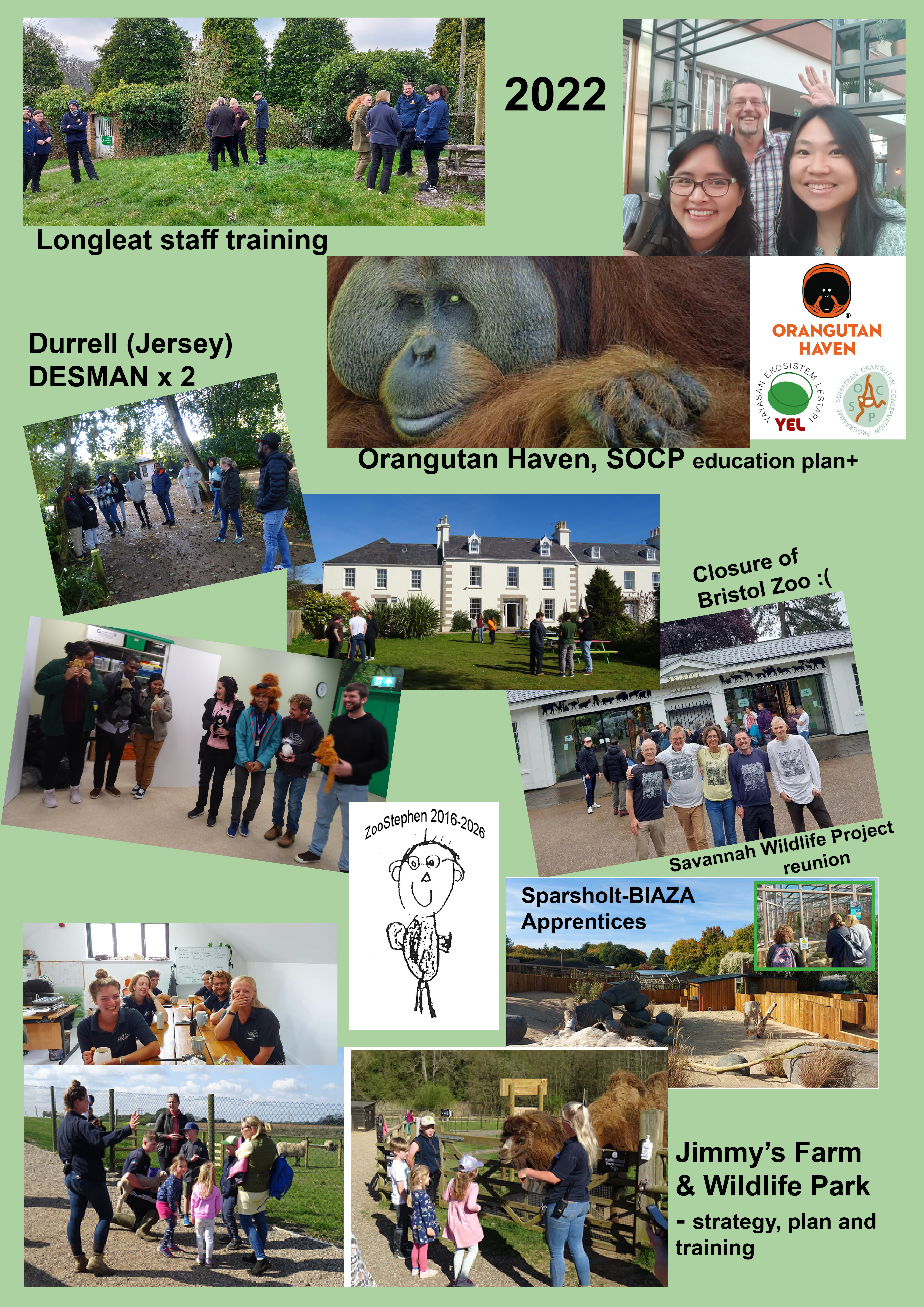
Opportunities to support strategy and education plans as well as training came primarily after my experience heading up Discovery & Learning at RZSS (2005-15) and I was able to apply this experience to help Belfast Zoo review and develop their education provision. Later this type of work enabled wonderful opportunities abroad – for Chimelong Group in China, EPAA Sharjah Safari in UAE and remote support for Orangutan Haven, Indonesia.
Visiting China and the Emirates was both enjoyable and stressful but afforded great opportunities and experiences and work with some lovely people. Whilst these were well resourced ‘wealthy’ organisations the reality of being a ‘expert’ sub-contract meant I did a lot of work for the relatively small number of paid days and accepted that my influence was limited but ideas and opinion welcomed.
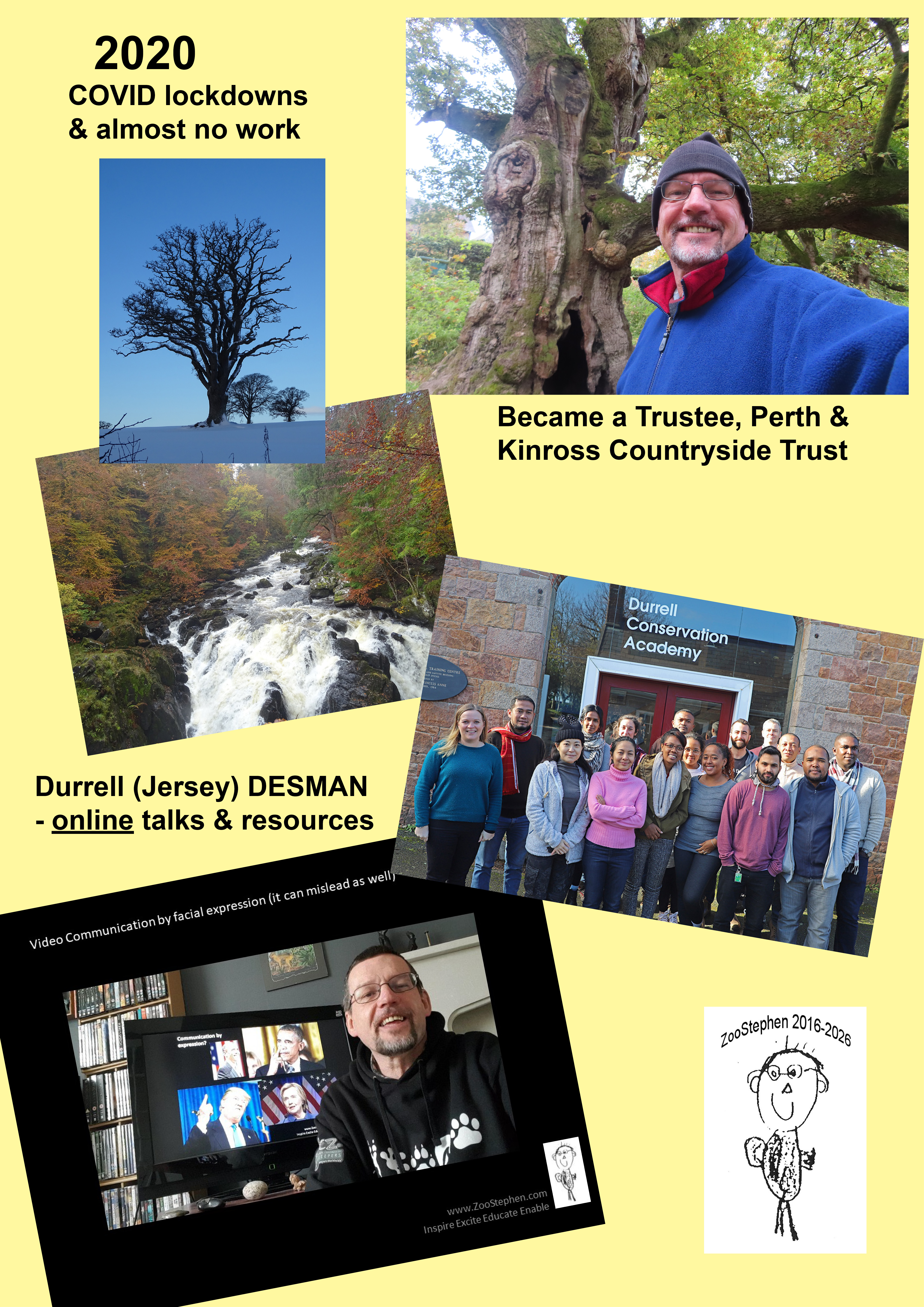
I did not anticipate that my December 2019 visit to Guangzhou would be my last… we were all caught off guard by the arrival of COVID-19. The impact was devastating for some. For me it was not only the loss of visits to China but suspension of face to face workshops and no income for a year! Thankfully I had savings. (The government support grant for me as a recent self-employed person was only a few hundred pounds. I don’t think many employees who were furloughed understood just how well off they were).
2020 and into 2021 therefore brought another pause and re-think and greater focus on what was important. Time with family, enjoyment of the outdoors and Scotland in particular took centre stage, whilst I took the attitude of take advantage of opportunities if I wanted to. It was a good time to volunteer and become a Trustee of Perth & Kinross Countryside Trust, help them develop a discovery & engagement role, and subsequently to take on being the Trust’s Chair. Latterly this has taken up a lot of my time and focus even though it is all unpaid.
A few zoos and colleges asked for workshops and advice which continued. By chance I was invited to comment upon educational development for Orangutan Haven by SOCP & YEL in Indonesia which led to some remote work. It would of course have been great to go out there. Covid restrictions limited opportunity for some time, however, it was also clear a lot of skills were there already. Whereas helping with the educational development at the brand-new Sharjah Safari was much better achieved with on-site support and working with the team.
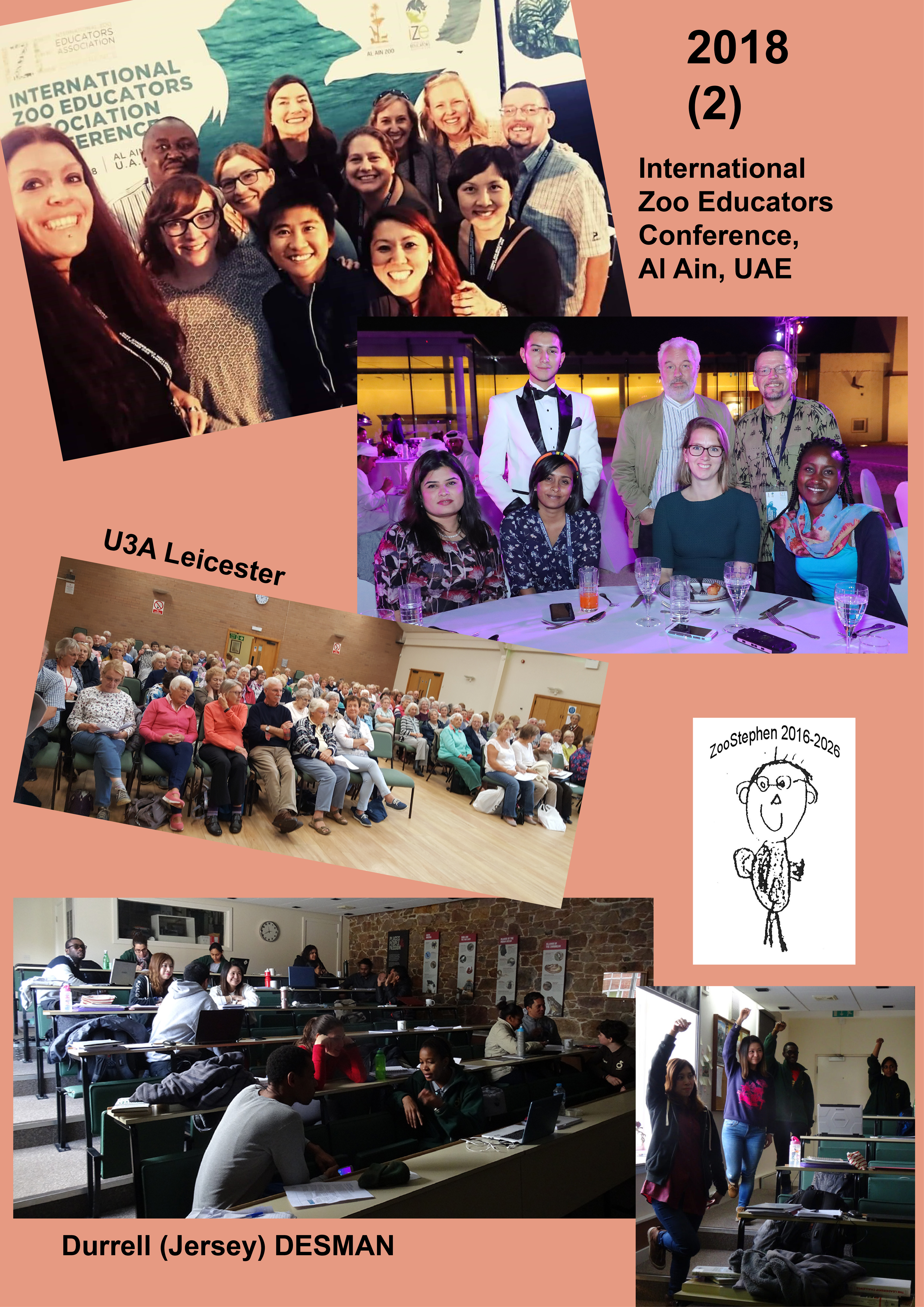
I remain connected to the zoo community, albeit more remotely and infrequently than in the past. However, it has been lovely to engage via the International Zoo Educators association (and conference in UAE), ABWAK and the annual symposia – speaking at some; and the EAZA educators meetings at Skansen, Sweden and Chester UK. It has also been an honour to be at the inauguration of the UK Animal Care Technicians conference UKACT as keynote speaker (and workshop) and speak at the innovative 1st (and 2nd) Keeperfest at Jimmy’s Farm & Wildlife Park.
JFWP is certainly one of the zoos to watch over the coming years. It has been great to support them with education strategy, programme and plans as well as staff training, whilst seeing significant expansion in the Park’s operation and profile. The Meadows Wildlife Park in South Wales also provided another opportunity to work with a farm park (with some exotics) and help them with conservation and education requirements.
The last few years have seen more difficult times. The demand for training and development is limited, and budgets tight. I have taken advantage of a few opportunities but my focus and priorities have also been more personal with family deaths. I also have the luxury of learning from covid-year that I can survive on very little. One of the things that has been of great help is my association with Sparsholt College and the UK zookeepers course since it started with them. The small amount of marking I do is enough to pay for council tax and heating every year.
Towards the end of 2025 and as we move into 2026 a new opportunity has arisen, thanks largely to my friend Daniel, with the Life Science Education Trust from India to support the training and development of zoo staff from India, SE Asia and ultimately further afield. So far producing a suite of ‘online’ learning materials in an educators course, keepers course and a free webinar. This year also sees running a workshop at the ABWAK Symposium at Drayton Manor and another in Helsingborg for Swedish zoo staff in April.
So these 10 years have been interesting and largely enjoyable. However, for any thinking this may be what you want to do it will only work if either you have the skills, contacts and energy to work at it and do a lot more or like me can live off savings and use the work to supplement ‘life’,
A big thank you to everyone that has supported and helped me. The ZooStephen story continues….
Thank you to clients and all for your support during 2025. Wishing everyone all the best for the season and good fortune in 2026.
I have not sent Christmas cards this year. Instead I have made a donation to St Giles Hospice (Staffordshire) “Light up a Life” virtual tree in memory of Mum & Dad.
One of the collaborative projects I have been working on in the last few months is “going live” for full trial. Working with Life Science Education Trust – based in India – and with & for Daniel O’Loughlin (a former employee and colleague who I also worked with in Sharjah alongside Sofiia from Ukraine).
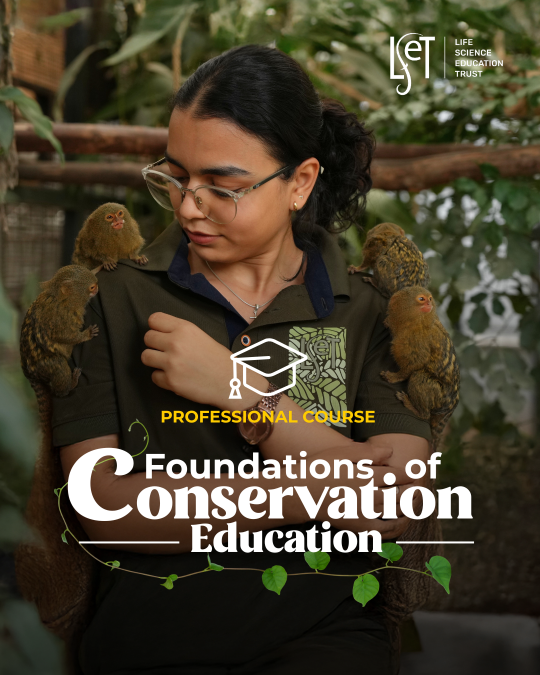
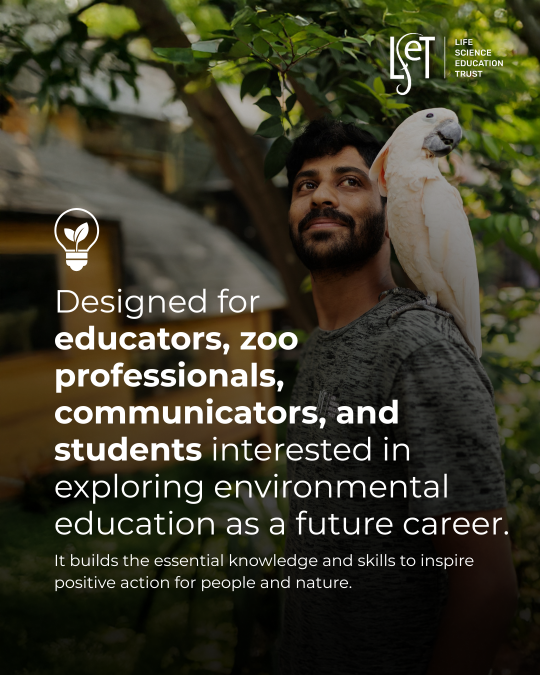
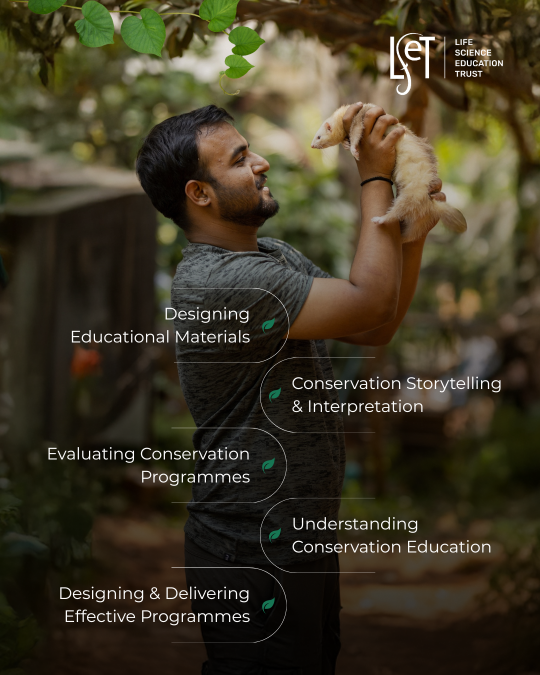
Our Foundations of Conservation Education course provides a gateway into the world of environmental and conservation education. Designed for educators, zoo professionals and students interested in exploring environmental education as a future career, it builds the essential knowledge and skills to inspire positive action for people and nature.
Sign up copy link: https://forms.gle/XK4eZFXHEJ5pXAa7A
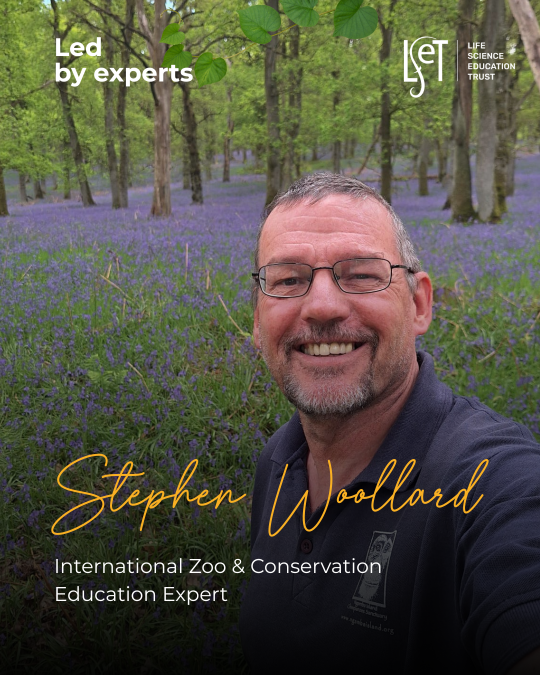
The course is taught by Daniel O’Loughlin, Stephen Woollard, Sofiia Pyshnieva & guest speaker Sophy Hughes in recorded lessons. Available online and the first 100 sign ups are free to trial the course and review it. Then it will be launched for all at a very low fee.
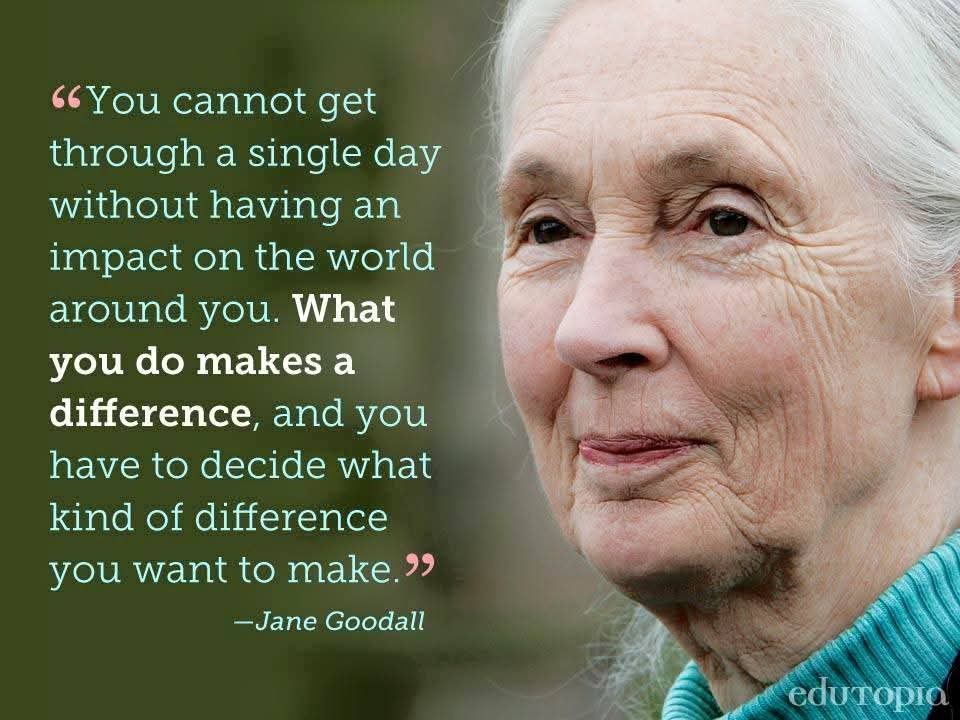
Autumn arrives with the sad loss of a great and truly inspiring woman, Dame Dr Jane Goodall, aged 91. To say hers was a life well lived or that she made an impact are gross understatements. Like many, my social media feed has been alive with shared messages of tribute, photos and video clips.
Most of us will be forgotten within a generation, a few, and not always the best, become part of history. Jane became a legend in her lifetime and its hoped will be remembered for generations. Why? She was just an ordinary woman? That in itself is a thing… she discovered tool creation and use in chimpanzees and their emotions and social structure and did so without being a qualified scientist or a man! Both of which meant she had to face derision, sexism and scepticism. However, with her character and some supporters, gained a PhD (without having an undergrad degree), used the fact she was photogenic and promoted chimpanzees to the limelight and became a “celebrity”.
For me, its not the ground-breaking and painstaking work studying chimps and reporting on it – as much as that was so significant and important – it’s her character, passion and enthusiasm and the work that she developed after – connecting people to nature, especially young people and being a UN Messenger for Peace. Her focus on ‘hope’ is a message we can take in many situations. The Roots and Shoots movement she founded literally put down roots and grew and will continue to thrive across the world.
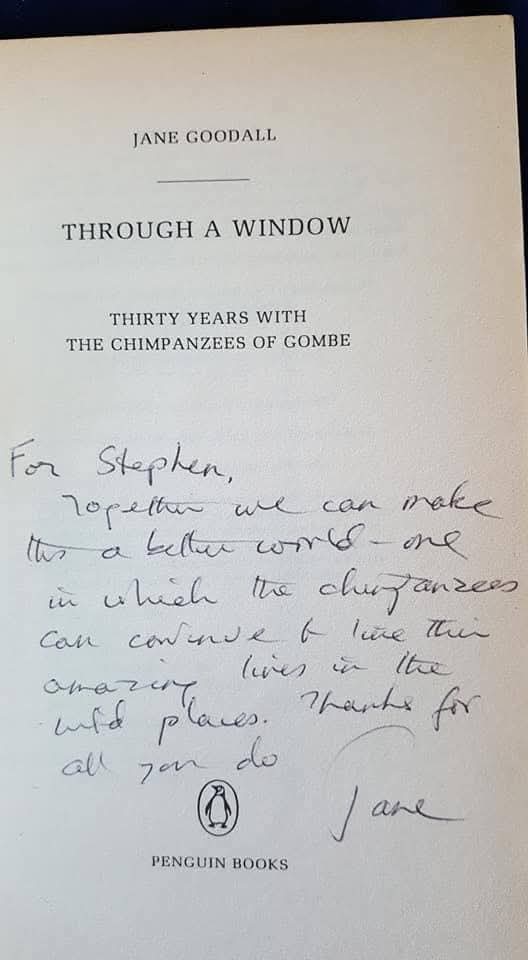
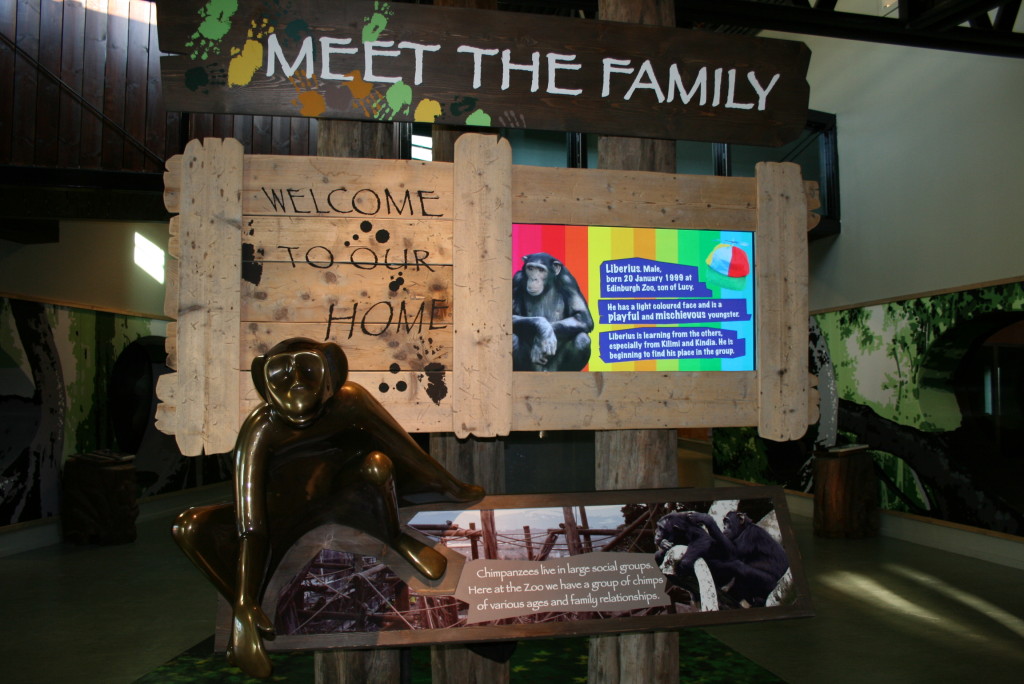
I was among many that were fortunate to meet her as well as hear her talk. In the several meetings I had it was clear that she was interested, cared, understood that her voice was important and powerful and inspiring, and she genuinely believed in the power of the individual and simple action. On one occasion she signed my penguin copy of ‘Through a Window’ and I got and embrace and kiss after showing her the work I had led on creating the interpretation story for ‘Budongo Trail’ chimpanzee house at Edinburgh Zoo. (This actually featured a tool-use exhibit using some of her National Geographic film).
I also remember how her ‘keynote guest talk’ at the International Primate Society congress in Entebbe Uganda was cut into two by arrival of President Musevni and she shone through that with professionalism and humour, as well as uncompromising comment on environmental matters.
Another aspect of Jane’s life that I reflect upon is the concept of ‘retirement’. She worked right until the end, indeed the ‘world’ was her home as she spent so little time based ‘at home’ (300+ days a year attending events, lectures etc). This was because she felt she could still make a difference, and indeed her work past ‘retirement’ age was very impactful and effective.
Retirement is something we are told to plan for and in many societies there is state support provided. In UK this means a guaranteed state pension. With our longer lives on average ‘retirement’ can be for well over a decade. Meanwhile, working people contribute to employer pension schemes and build a ‘pot’ of money to live on in retirement and some seem to have an expectation of the same standard of living as when employed… Personally, I will survive quite well on the state pension and my savings as I have never lived beyond my means or had a high salary. When should I retire? Some would say I have already done so. I only work part time and occasional contracts, largely by choice. I can enjoy the outdoors and country around me whilst fit enough to take long walks and hikes.
Over the last few months I have been very busy, a lot of this has been focused upon my voluntary role as Chair of the Perth and Kinross Countryside Trust. It is great to enjoy the work and impact of the small staff team, recruit new staff and new Trustees, meet with our Youth Council and enjoy the countryside and support the delivery on various projects.
I would always encourage people to volunteer and to consider Charity Trusteeship however don’t think it’s just a nice thing to do, to support and share your expertise, there is also the weight of responsibility in this role – and it is a legal one too. The amount of work involved varies but being a charity Chair is significant. My tenure includes the retirement of the Trust Director (CEO) and unexpectedly this has included ‘extending’ the role by mutual agreement. So even when you plan to retire, be prepared!
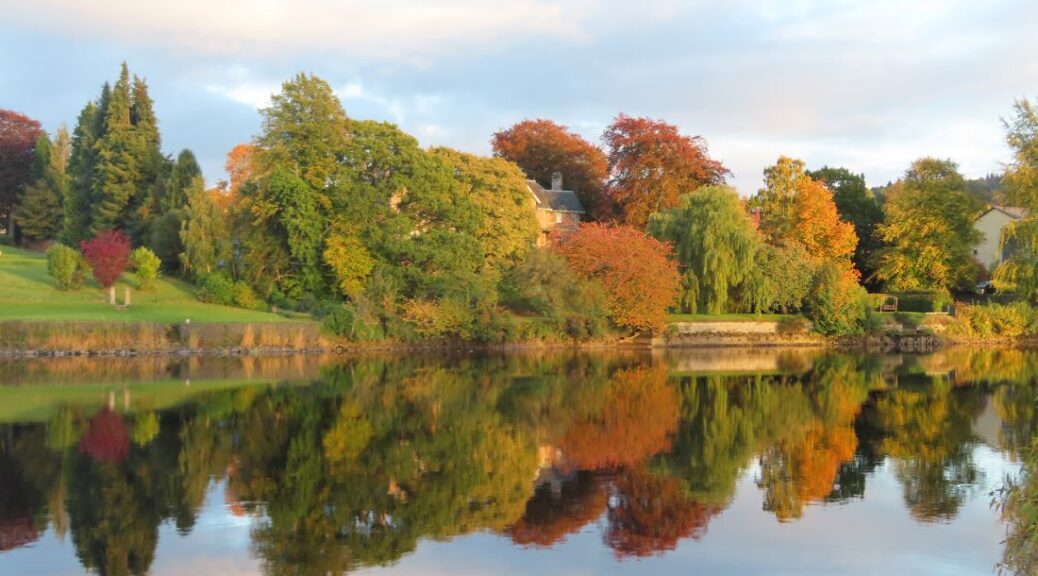
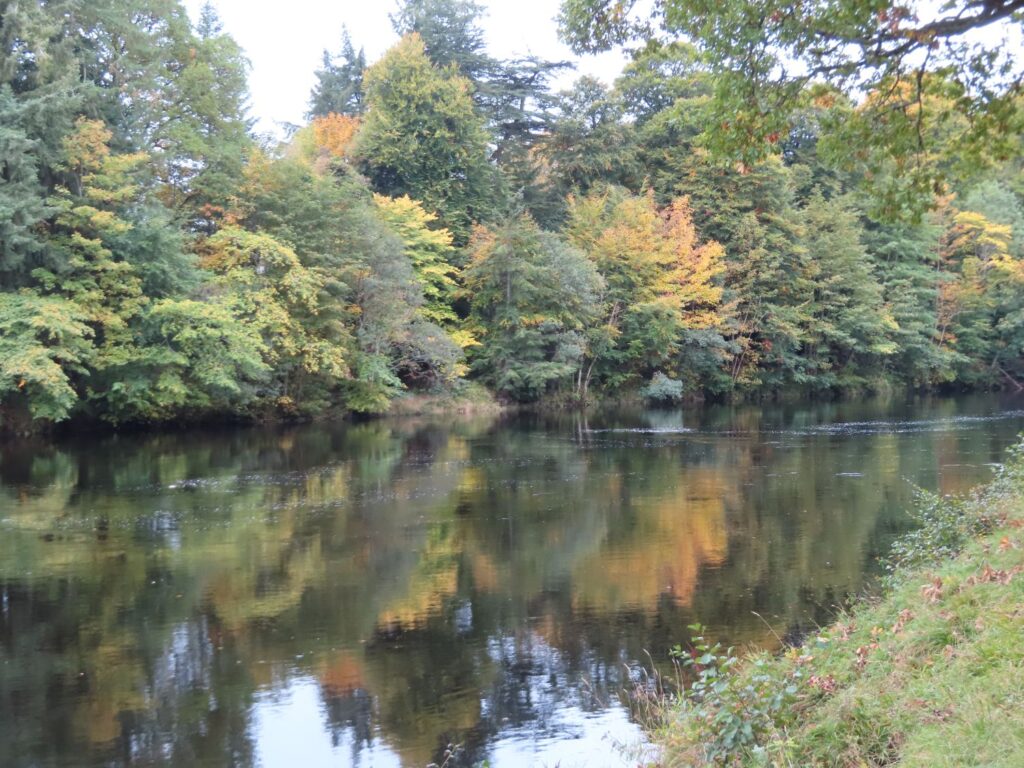
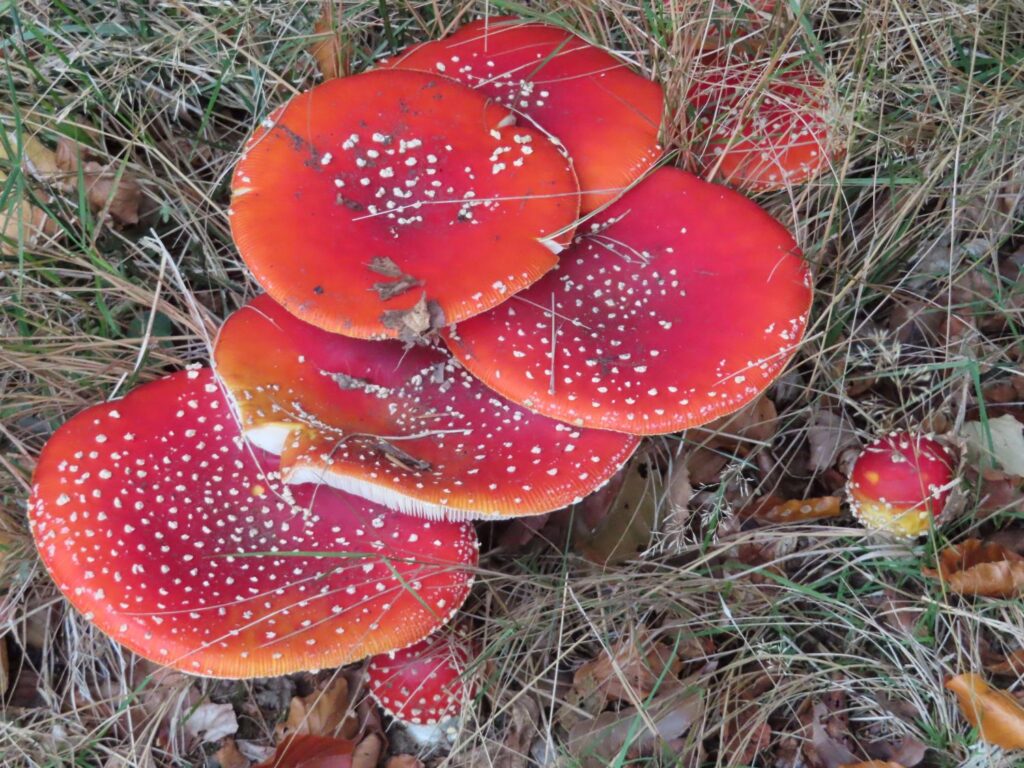
All of this is happening as we enter autumn and the most beautiful tree colours are showing across the region, with Perthshire and ‘Big Tree Country’ being a hotspot for autumn magic. This year is also a ‘mast’ year with the oaks in particular producing a bumper crop of acorns. It has also seen an abundance of fungi.
Autumn is a time of change and transition to winter. There is in the beauty in seeing the colours and then the fall of the leaves gives hope for the spring when they return with new life. For some people in my work sphere of zoos and wildlife parks, particularly in the UK, this autumn brings challenge and bad news with cuts, redundancies and closure, so I hope that they can look forward to Spring even if that means changed role, location or career.
Remembering Jane Goodall once more “Without hope we will fall into apathy and do nothing, without hope you’re not going to roll up your sleeves and get out there and do something to change the world. Somehow we’ve got to give young people enough hope that they can carry on and believe in a better future”.
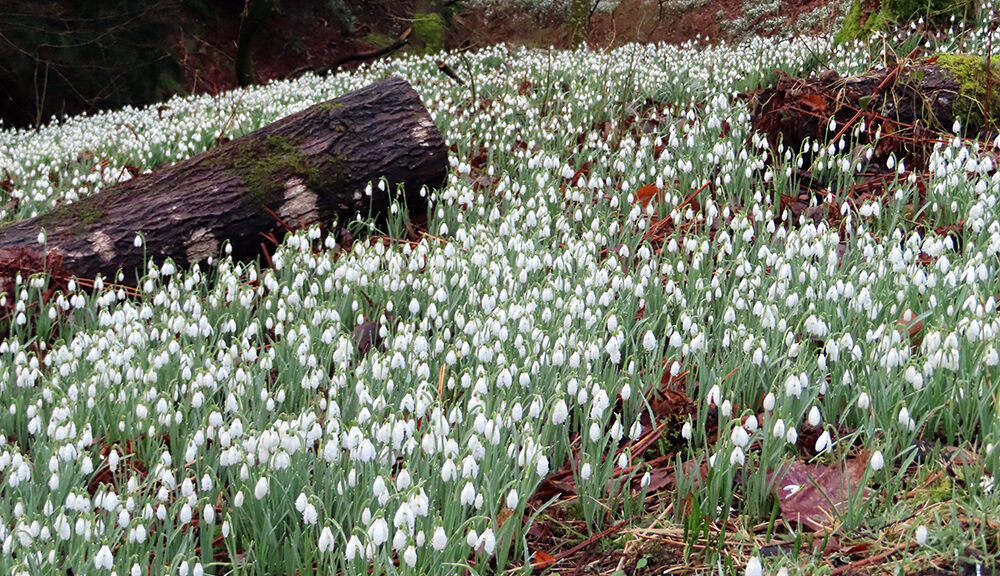
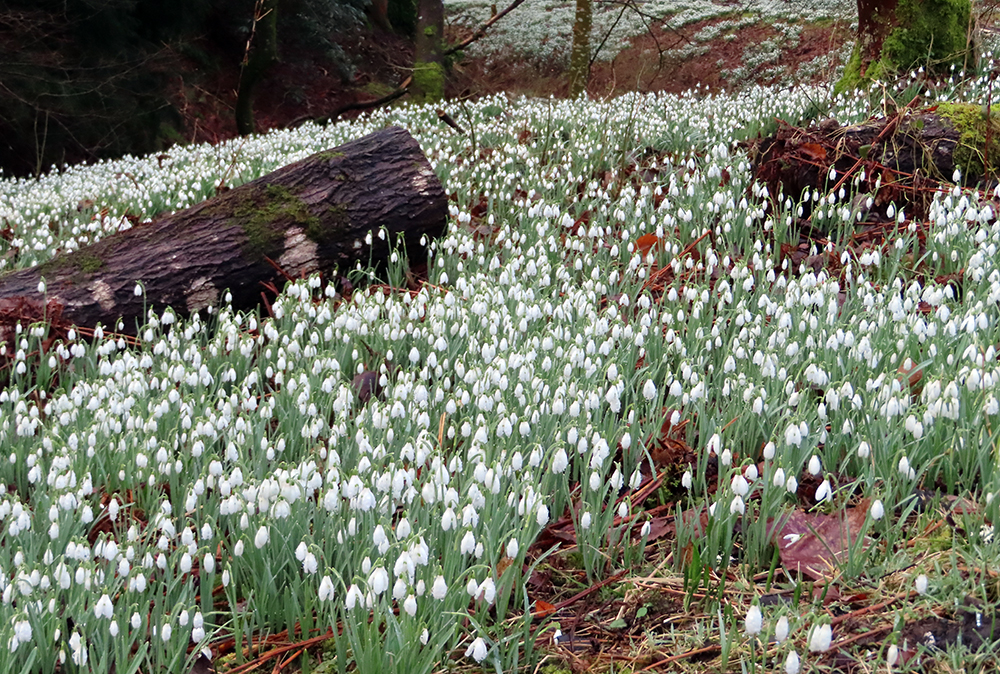
Winter will soon roll into Spring and a time of growth and renewal in nature. The snowdrops are great heralds of this and it is always a pleasure to see them. I am lucky to have some great displays of them nearby – and particularly Friar’s Den at Scone Palace Estate is always a good display. However, snowdrops are not native to the UK, having been introduced from Europe 300 years or so ago.
The snowdrop is not only a welcome sight but has medicinal properties too. It does raise the question for nature in general, do we value it more for aesthetics? for what it can do for us? what it can be sold for / economic value? And in today’s world does economic value out-Trump 🙂 the other ways of appreciating and valuing nature? The ‘environmental or ecosystem-services‘ provided by nature are largely under-valued and this impact’s decisions made on approving change of land use, eg in the past planting commercial forest on land that is important grassland or peat bog habitat and now huge solar-farm developments on agricultural land instead of on buildings and brown-field sites.
The winter in Scotland has also seen illegal wildlife release, lynx and some wild boar, widely covered in the news. This was undoubtedly irresponsible and unhelpful and can particularly entrench views and make it more difficult to discuss options with those opposed. Scare-mongering on possible negative impact, and the occasional actual negative event, is common with any reintroduction of a predator – there are continuing issues with birds of prey poisoning for example.
Going back to the snowdrops…. at the time they first appeared in the UK what many today photograph and think are the ‘beautiful Scottish hills’ were largely covered in trees and looked very different. There are places on a smallish scale that ‘rewilding’ is now occurring. The question that often arises is how will it be paid for? If the ecosystem services were given true value – including for example, holding water, limiting flooding and soil degradation – then there is a payback but its not the get rich quick that exploiting the environment brings. Ultimately act for today and tomorrow will pay the price, so act for tomorrow and all can benefit (but more equitably) and the billionaires won’t expand their fortunes on the same scale!
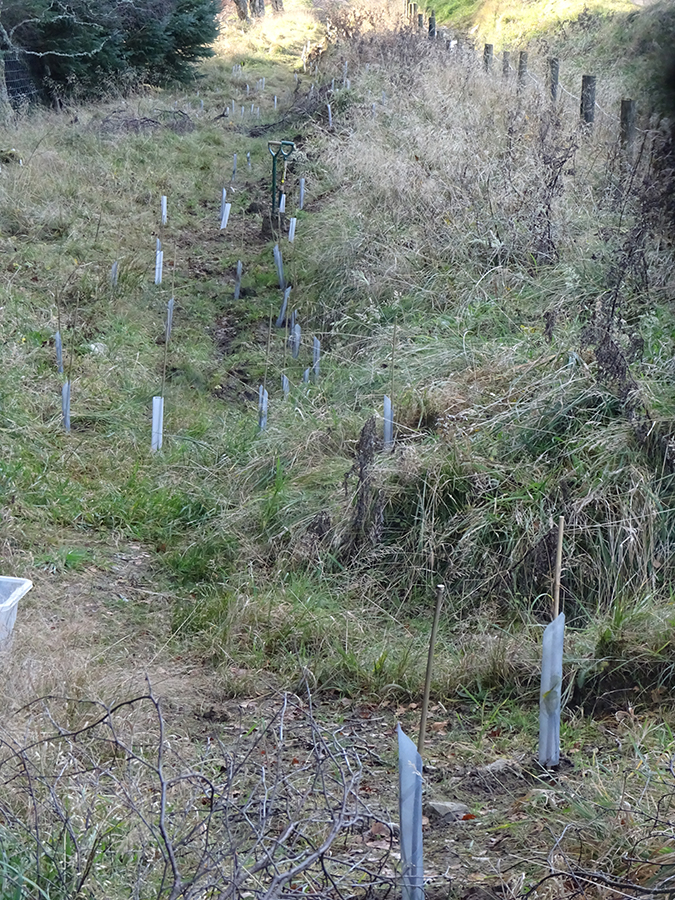
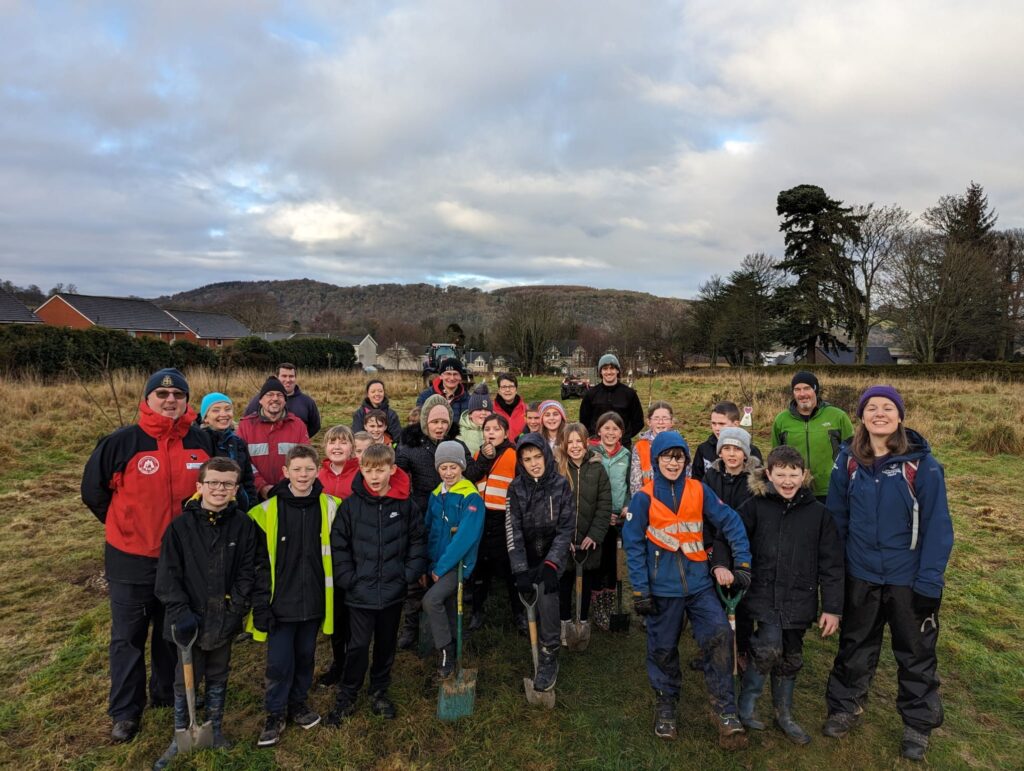
To this end, in a very small but effective way, I have been delighted to get involved in some tree-planting this year, as part of our Perth and Kinross Countryside Trust ‘Tree For Every Child’ project. Nearly 1,000 trees have been planted by school children and the community with us, on a site by the Dunkeld House Hotel Land Rover experience, as well as more trees around St Magdalene’s Hill, Perth, the Bunkhouse at Glassie Farm, Aberfeldy and school grounds.
The year ahead is going to be challenging for many of us, not least because of political change elsewhere. I hope that both Gaza and Ukraine get the chance to peacefully rebuild – not just the homes for people but also for nature. It’s known that engagement with the environment, nature and wildlife is good for mental health and well-being. So the more the better.
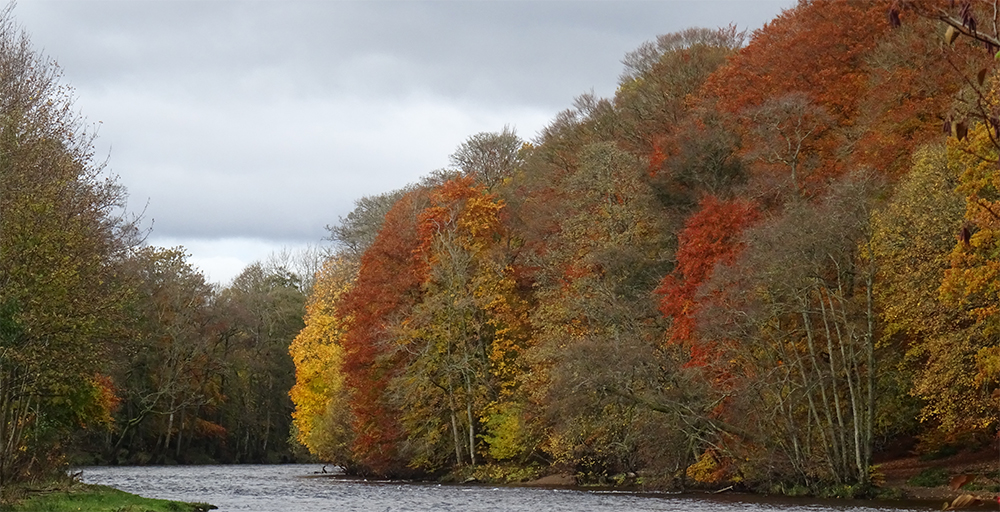
Autumn is a season of change and brings amazing colours, especially where I live in Perthshire, Scotland. It is a time to enjoy and celebrate, despite knowing the cold months of winter are coming.
Trees are under-appreciated and often ignored, unless they are ‘in the way’, present a hazard, fall after a big storm… but at this time of year many people do acknowledge them, enjoy their variety, size, colour and simple aesthetic beauty. You don’t have to know or understand the science and process of leaf change to appreciate it, and its freely available to all – although I know some can find getting into the countryside more difficult.
Being Chair of Perth and Kinross Countryside Trust [PKCT] I have a role, alongside my fellow Trustees, in supporting and encouraging access to the countryside. We are fortunate to have a brilliant small staff team and the support of various Trusts and organisations to pay for their work. So thanks to them. Many people will enjoy a country walk, cycle or ride, or just a stop at the views and not know that PKCT has had a hand in helping them. Our public-facing activity is gaining profile, especially beginning to attract a younger audience, with ‘Discovery & Engagement’ activity including a Watch group, tree-planting and a Youth Council. So I am hopeful for the future.
Encouraging an interest in nature and the countryside can also begin with a small patch of garden, the local park, having a pet to care for, visiting a zoo or farm park.
At the start of October I was in South Wales and made a return to the lovely Meadows Wildlife Park near Caerphilly. It was great to work with the staff team and help develop their public engagement, education and communication skills.
The Park’s rebrand in late Spring has been very successful with lots more visitors through the summer and there is continued development of the site for enhanced animal and visitor experience. The staff team are friendly and enthusiastic and it was great to work with staff from a range of roles. It was also so nice to receive a message of thanks afterwards that included:
“Your deliverance of excitement and enthusiasm teaching the team to be confident and inspire interest in educating and welcoming our visitors really nailed the brief.”
July saw the first in-person National Zoo Academy Conference at Sparsholt College. (The first such meeting was held online last year). This was a great opportunity for students/graduates and invited guests to share expertise and knowledge and celebrate achievement in the field of animal management and ‘zookeeping’.
I was honoured to be an invited guest for the day and to deliver a keynote talk on reflections upon my career and embracing change over the years. From black and white TV and plugged in phones, through cassette tapes to digital technology, computers and smartphones. However, communication and animal care remain ‘real hands-on’ activities, that have also advanced and developed over the years.
It was great to listen to the short research reports – DMZAA & degree graduates showing the benefits of combining both practical experience and qualifications in zookeeping. The DMZAA course was largely developed by Andy Beer at Sparsholt 20+ years ago – who attended to give a short history – utilising the Certificate in Animal Management C&G course (previously a National Extension College course) that was developed by ABWAK, the Federation of Zoos (now BIAZA) and others in the 1980s. Today the course has a strong ‘volunteer’ version CMZAAV and has overseas ‘international’ graduates too. It also was used as the Foundation of the Zoo Apprenticeship programme and was a key contributor to and benchmark of the EAZA European Professional Zookeeper Qualification Framework.
Zookeeping often brings to mind the large traditional zoo, however, many keepers work in the diversity of smaller collection across the country. So in July, I was pleased to help The Meadows Wildlife Park, Caerphilly, South Wales, in developing their education and conservation roles. This park, established in 2019, has grown from a ‘farm park’ to one that now features other species, including prairie dog, kookaburra, emu, capybara, rainbow lorikeet and porcupine.
The Meadows focuses upon the visitor experience and opportunity to engage with various animals and pursuit of good welfare. The small staff team, supported by volunteers, have great enthusiasm and dedication and over time the Park should be able to make a useful contribution to both education and conservation locally as well as encourage responsible animal care and consideration for the environment.
The seasons change again, although we can’t rely on specific dates or equinoxes to fix these changes. Climate change is having an impact, weather patterns and an unusually wet winter are being commented upon and recognised. However, action to mitigate these changes is still slow and the subject of political position and decisions.
The snowdrops looked wonderful all through February with a great display as usual at Scone Palace estate near Perth. This is also the ancient crowning place of Scottish kings (including Macbeth and Robert the Bruce) – where the Stone of Scone was used before being taken by Edward I to England. It was repatriated to Edinburgh Castle in 1996. As I write this the Stone has moved from Edinburgh to its home in the new Perth Museum.
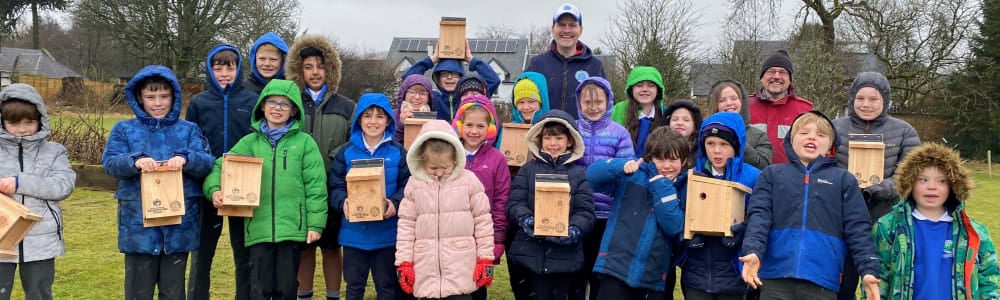
It has been another good start to the year for the Perth and Kinross Countryside Trust, that I am honoured to Chair. The River Tay Way project has a new ‘hub’ public facility in Aberfeldy. Trees planted last year and this are growing and the Perthshire Nestbox project has delivered boxes to schools across the county (Fossoway Primary illustrated), and much more. Our funders and small staff team enable us to achieve a great deal for the people and countryside of Perth & Kinross.
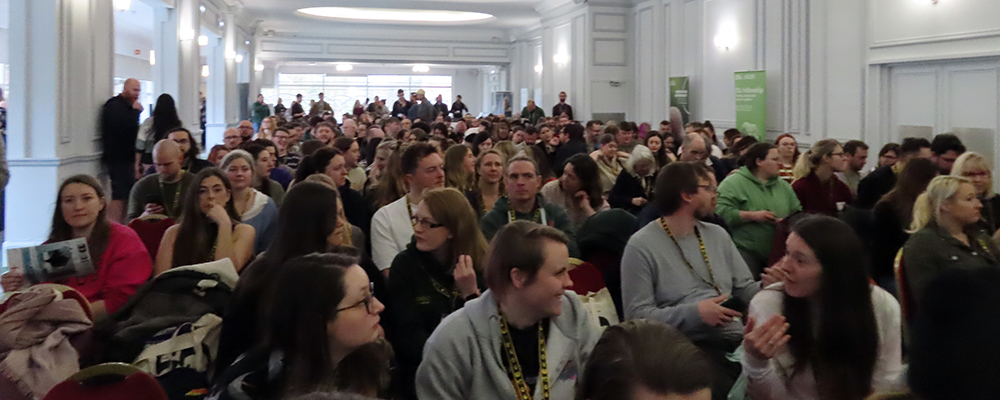
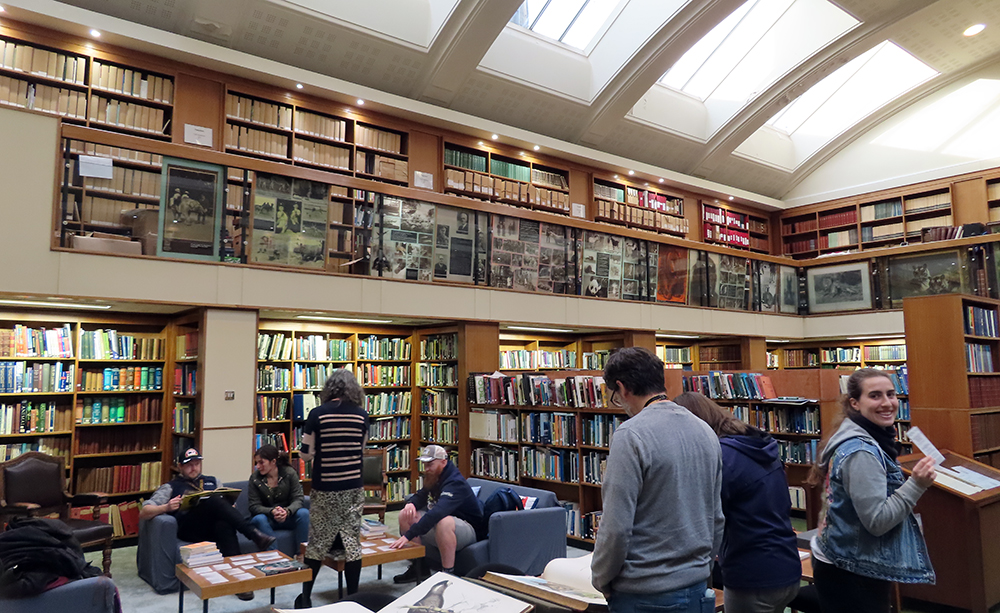
This year also marks the 50th anniversary of ABWAK, the UK zookeepers association. I have been a member since 1987 and served on Council 2003-17, and was delighted to be invited to attend and speak at the Symposium held at ZSL London Zoo at the start of March. It was made extra special with the attendance of Jon Barzdo, founder of ABWAK. History is a key feature of the Regents Park site, including the ‘Lubetkin Penguin Pool’ (made from reinforced 1930s concrete that features heavily at Dudley Zoo). The ZSL Library was also good to visit again – not least to see some of the historic books and documents, including a 1st edition of Darwin’s On the Origin of Species’.
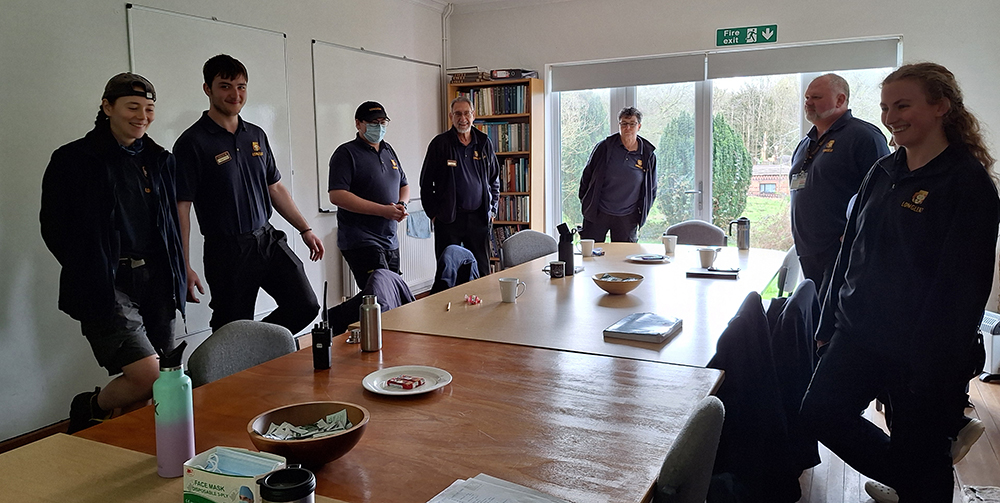
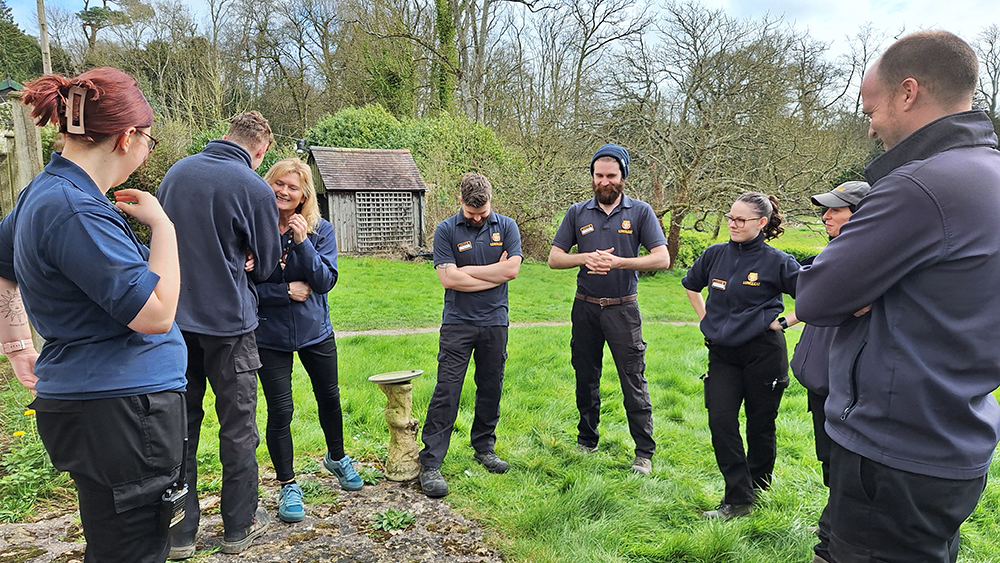
This March I was pleased to be asked to return to Longleat in Wiltshire to run my staff Communication & Presentation Skills workshops. It is always a pleasure working with the staff and team here supporting their public engagement, conservation messaging, customer care and professional development. The interactive workshop is always FUN and in the words of Darren Beasley, Head of Animal Operations:
“Longleat benefits not only from his expert knowledge but also receives a bespoke training package created on education, presentation and communication skills for our animal department gang. Those attending receive a full day of engaged learning, new skills and leave with confidence to deliver presentations to a high standard.”
This month I was also able to do a ‘guest training talk’ online to the team working with Luke Harding at Mandai Wildlife, Singapore Zoo & associated sites. It’s great that we can use technology to deliver training like this across the world. It is more effective in person and on site, however, there are benefits that can be gained from remote ‘teaching’ too.
The end of another year and it has been a challenging one in many parts of the world, not least with continuing war in Ukraine and the awful escalated Israel-Palestine conflict. At the same time the global threats to biodiversity and impending effects of climate change and seemingly weak response from world governments, don’t give much cause for optimism. We’ve also seen the power of ‘nature’ with flooding, landslides, powerful storms etc. – and there is stronger evidence to suggest these weather patterns are linked to human impacts on our planet (climate change especially).
Recently however, I have been heartened to see and be involved with the ‘Tree for Every Child’ initiative of the Perth and Kinross Countryside Trust that I currently Chair. It was great to help plant trees at Glassie Farm above Aberfeldy. Glenlyon Primary school had already planted some trees. Then in December, I joined pupils from St Madoes Primary in planting fruit trees in their village. Hopefully these young people will see their trees grow over the years (and get free fruit).
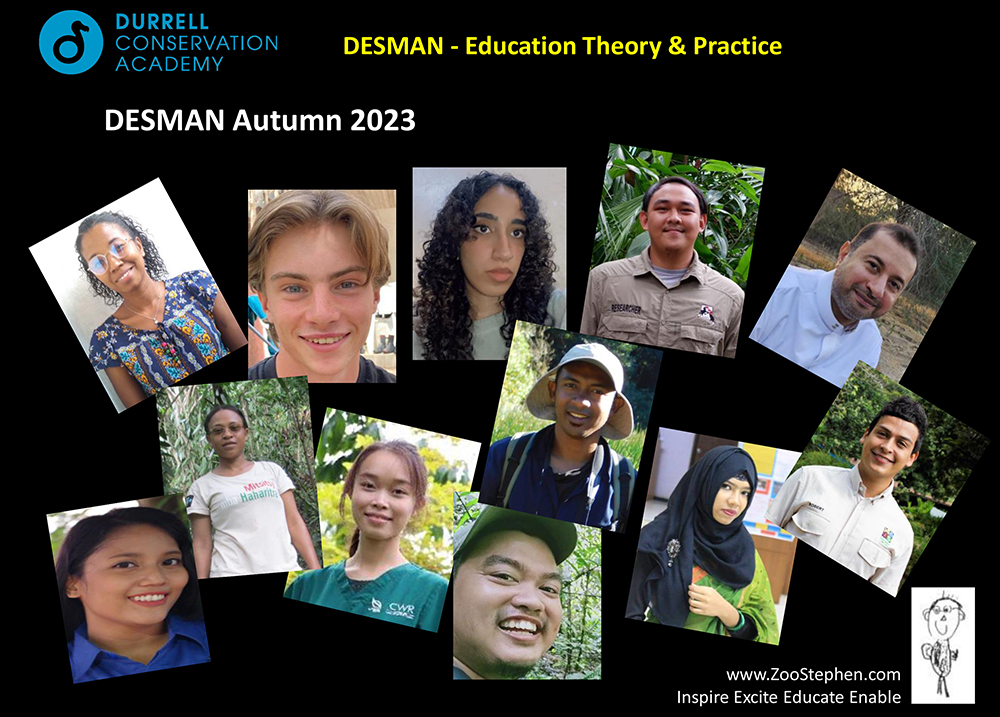
In November, it was good to get a big ‘fix’ of optimism by working with the latest group of students on the Durrell Conservation Academy DESMAN course in Jersey. As usual it was a fun few days covering theory and practice of environmental/conservation education and learning about the work of these inspiring people. The group this time were from Bangladesh, Colombia, Indonesia, Madagascar, Oman, Philippines, Saudia Arabia, Singapore and UK.
Meanwhile, a new group of zookeepers and volunteer keepers began their work on the BIAZA – Sparsholt College DMZAA and CMZAAV online course and its great to be an assessor on year 1 once again.
So as Christmas comes and goes and we celebrate the arrival of 2024, what new resolutions should we have…. be happy, be positive, be optimistic and look forward to continuing to enjoy nature around us and celebrate those that are helping and making a difference.