Spare a thought for those members of staff in zoos, aquariums and visitor attractions that are tasked with communicating with visitors. It’s not as easy as you may think.
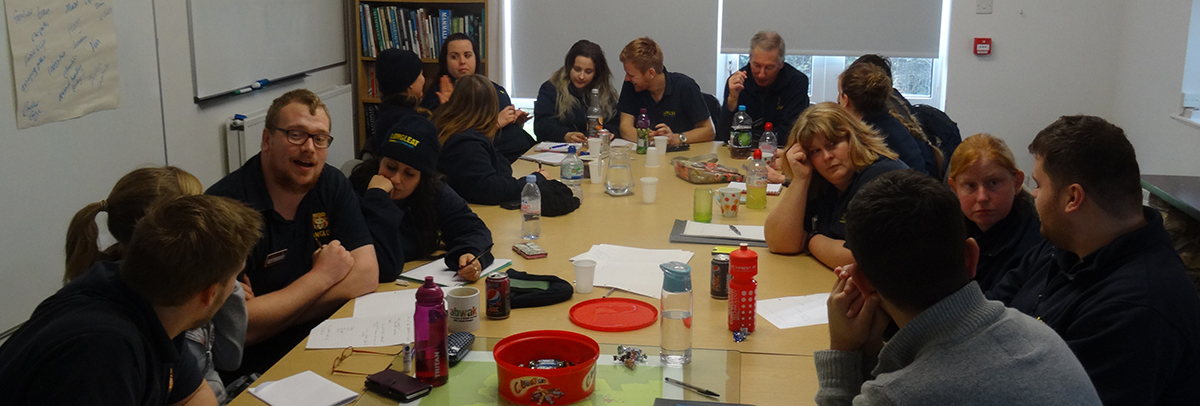
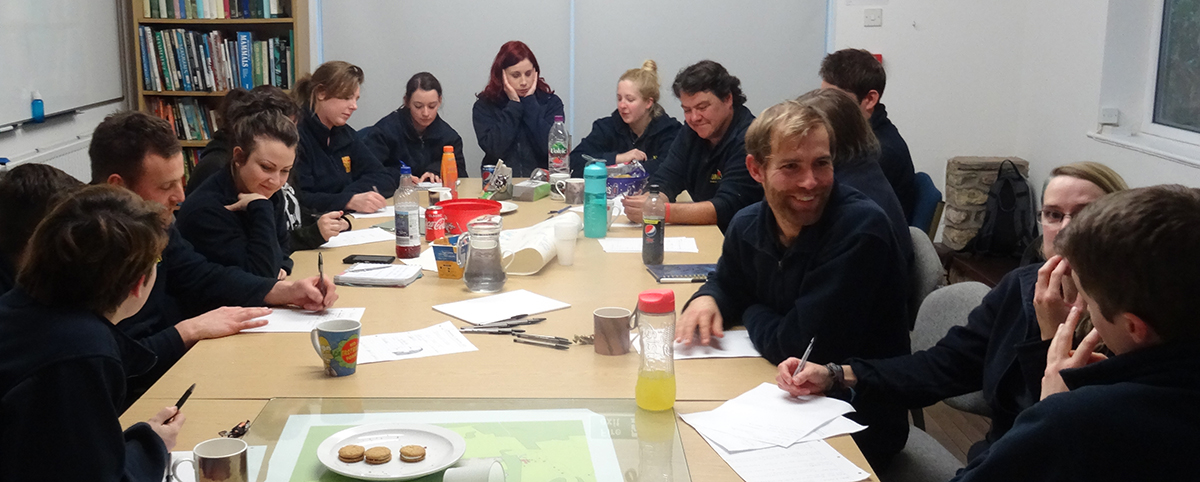
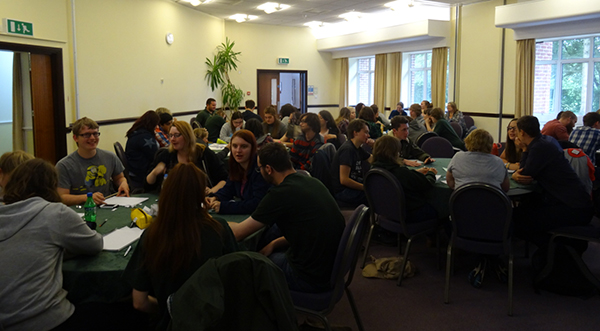
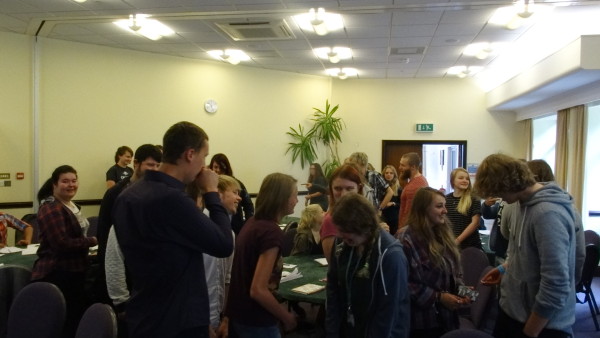
I was delighted to work with the excellent staff team at Longleat, Wiltshire, mid January 2017, in two one day workshops developing th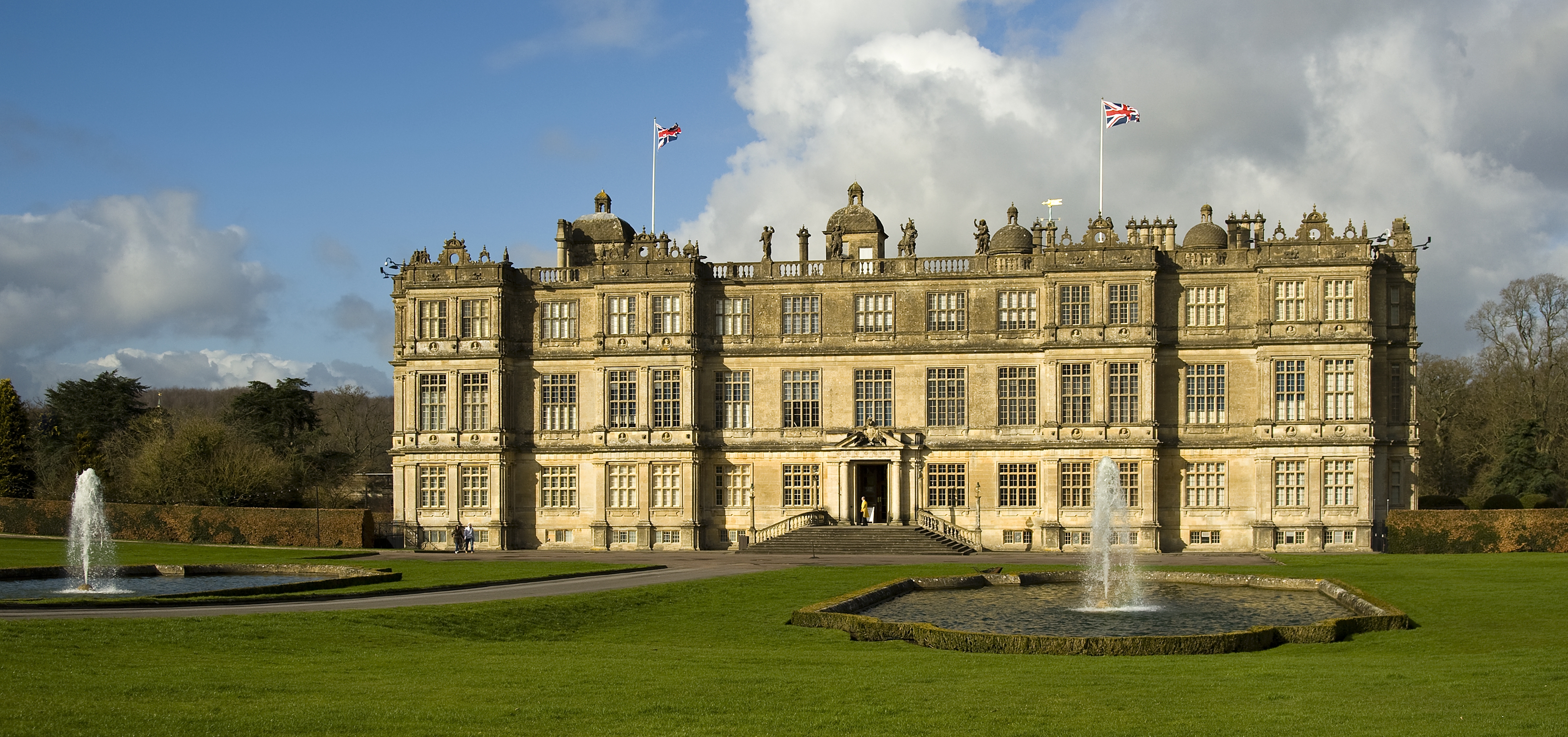 eir skills in presentation and communication. Longleat is an amazing place – not only the UK’s first safari park (opened 1966) but also has a walk around animal adventure area, lake and boat safari, play areas, train, the maze, and of course Longleat House and estate.
As an illustration of the challenge faced by the ‘educator/ keeper/presenter’, we looked at the Longleat Jungle Cruise – which is a short boat excursion on the lake, featuring Californian sea lions (an opportunity to feed), African hippo, gorilla islands and native wildlife. The presenter not only tries to talk about all the species, some conservation concerns, and other aspects of Longleat, but also do the safety announcements and oversee the sea lion feeding with the passengers who want to do it (small charge).
As part of my workshop, in small groups, the participants looked at what the objectives should be for the cruise, using the ‘Learn, Feel, Do’ model and enacted the experience – with considerable humour.
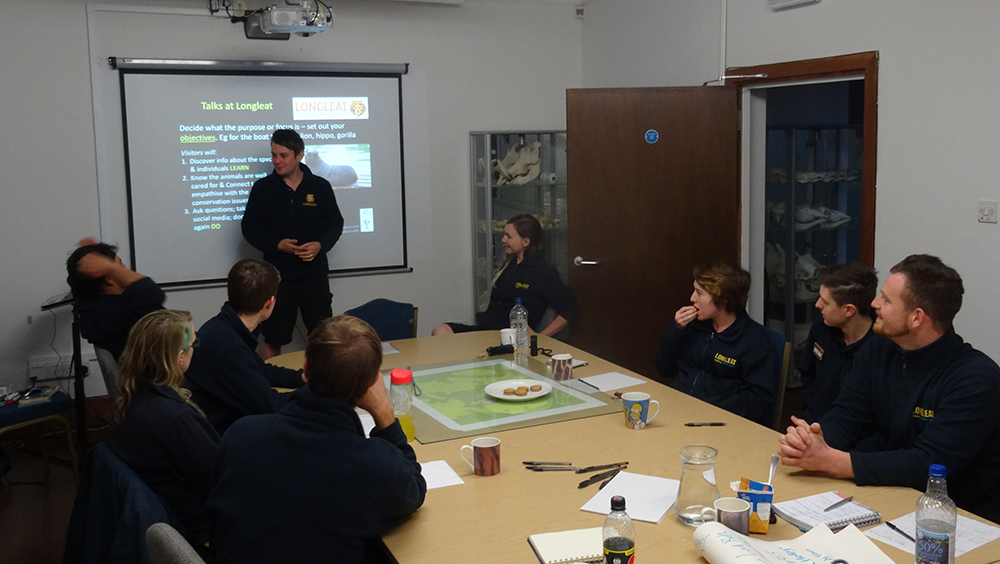
Sometimes, its good to recognise that you can’t say it all, and visitors aren’t going to listen to it all anyway. So the challenge is to make the ‘talk’ and associated activities FUN and set realistic objectives to achieve, not least of which is to inspire and excite visitors with the natural world and encourage them to find out more and get engaged in activity to support long term conservation.
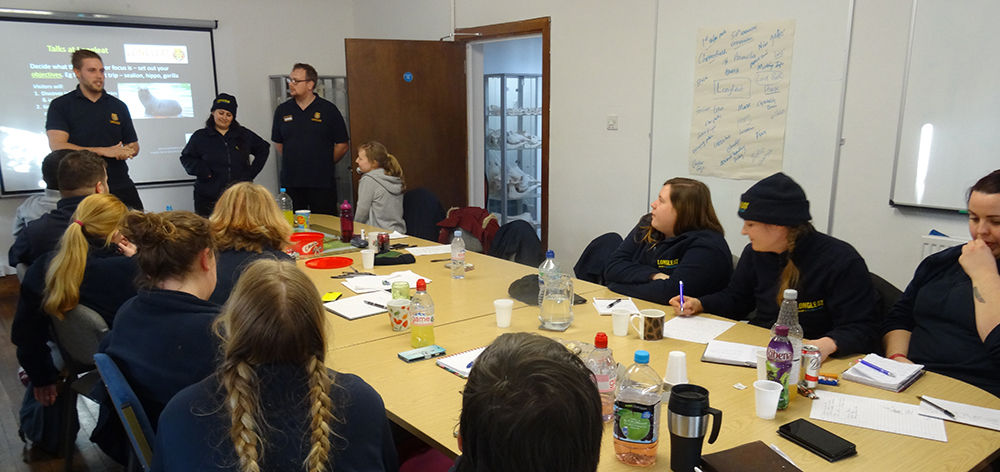
The workshop included diverse activities and presentation of ideas and background and I thank the team at Longleat for their very positive feedback, for example:
Really good day, enjoyed the practical part a lot. Thank you.
Very informative and inspirational.
Very informative. Gave me more confidence to do talks. Thank you.
Excellent workshop. Well prepared and researched. A range of examples with numerous ideas out of the box, inspiring a different way of thinking. USP is enthusiasm + passion.
 It is however, disappointing that in many cases, the support for training is expressed and stated in policy but not followed through in terms of providing sufficient time and resources to enact. My training workshops are therefore provided cheaply to enable participation and engagement and motivation; likewise ABWAK workshops are designed to support keeper development at minimal cost and use the community’s shared expertise.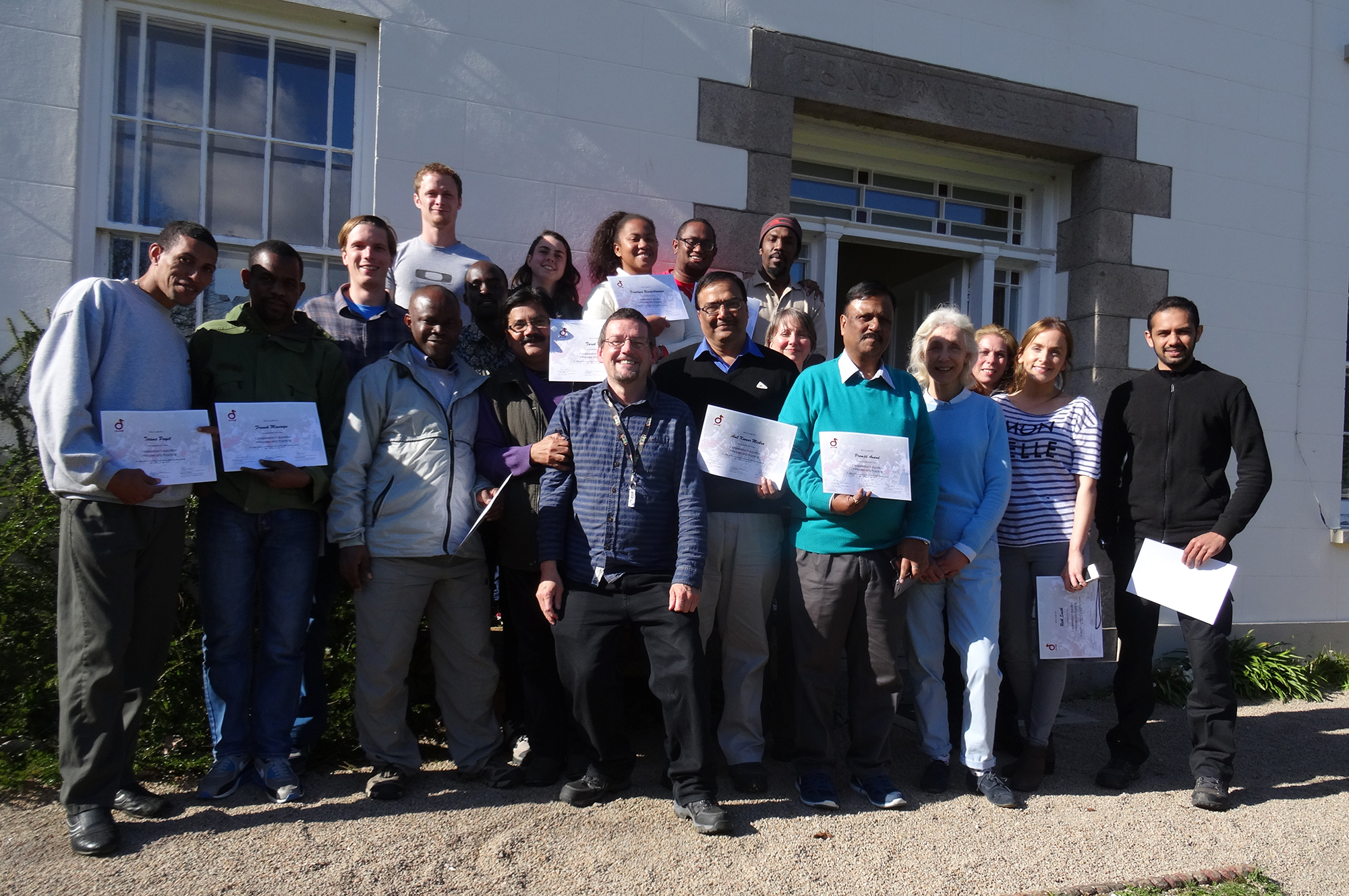
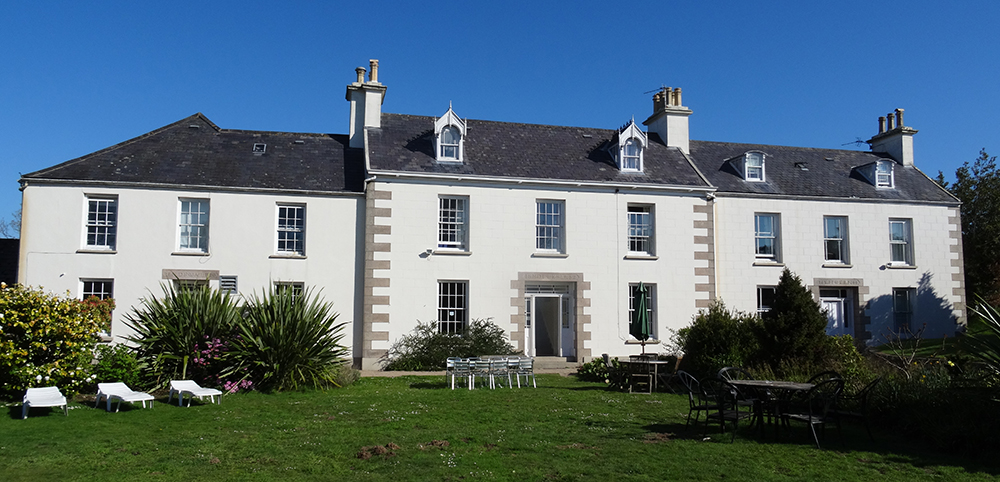
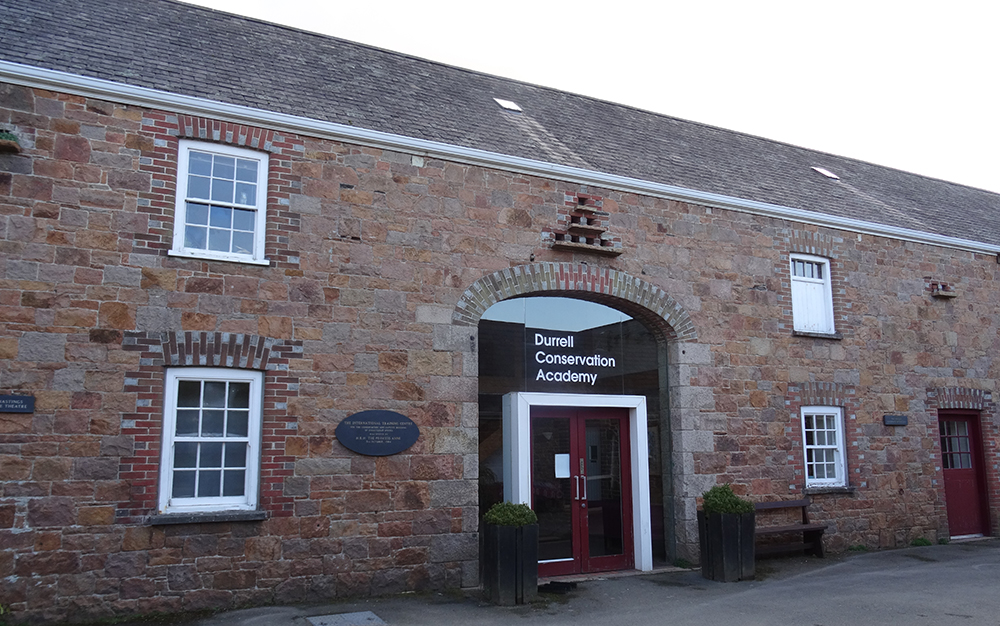 With the 12 week DESMAN – Durrell Endangered Species Management Graduate Certificate – the participants achieve academic recognition, validated by the University of Kent. The course has a high reputation and it is brilliant that scholarships are available.